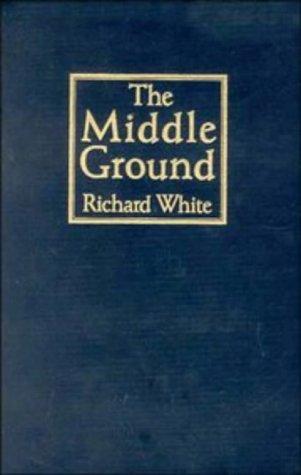
The Middle Ground
0
0
As an Amazon Associate and affiliate partner, Menrva Books earns from qualifying purchases. Learn more
Author Description
This book seeks to step outside the simple stories of Indian/white relations--stories of conquest and assimilation and stories of cultural persistence. It is, instead, about a search for accommodation and common meaning. It tells how Europeans and Indians met, regarding each other as alien, as virtually nonhuman, and how between 1650 and 1815 they constructed a common, mutually comprehensible world in the region around the Great Lakes that the French called the "Pays d'en haut". Here the older worlds of the Algonquins and various Europeans overlapped, and their mixture created new systems of meaning and of exchange. Finally, the book tells of the breakdown of accommodation and common meanings and the recreation of the Indians as alien and exotic. The process of accommodation described in this book takes place in a middle ground, a place in between cultures and peoples, and in between empires and non-state villages. On the middle ground people try to persuade others who are different than themselves by appealing to what they perceive to be the values and practices of those others. From the creative misunderstandings that result, there arise shared meanings and new practices.
Menrva's Summary
THE THESIS
This book investigates the complex interactions between Europeans and Indigenous peoples in the Great Lakes region between 1650 and 1815, moving beyond simplistic narratives of conquest or assimilation. Richard D. White examines how these distinct groups, initially viewing each other as alien, gradually constructed a shared world characterized by mutual understanding and new systems of meaning and exchange. The narrative focuses on the
THE SCOPE MAP
- Exploration of the
- middle ground
- as a space of negotiation and persuasion between cultures.
- Analysis of the creation of shared meanings and new practices through
- creative misunderstandings
- ,
- Examination of the breakdown of accommodation and the subsequent re-creation of Indigenous peoples as
- alien and exotic
- ,
- Focus on the period between 1650 and 1815 in the Great Lakes region, referred to by the French as the
- Pays d'en haut
- ,
- Discussion of the overlapping worlds of Algonquins and various European groups.
- Investigation into the initial perceptions of Europeans and Indians as virtually nonhuman.
- Description of the process of seeking accommodation and common meaning rather than simple dominance or persistence.
THE AUTHORITY PERSPECTIVE
The book is recognized for its nuanced exploration of intercultural relations, moving beyond binary interpretations of conquest or assimilation. It is lauded for its detailed examination of how disparate groups, initially viewing each other with profound alienation, managed to forge a shared world and common understandings. The concept of the "middle ground" itself has become influential in historical and anthropological studies of intercultural contact. The work is appreciated for its sophisticated analysis of the processes of persuasion, misunderstanding, and the eventual breakdown of these accommodations.
Page Count:
544
Publication Date:
1991-01-01
ISBN-10:
052137104X
Non-Fiction
History
Community Tags
Similar Books