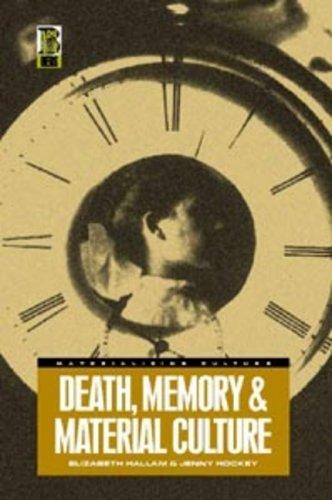
Death, Memory, and Material Culture
0
0
As an Amazon Associate and affiliate partner, Menrva Books earns from qualifying purchases. Learn more
Author Description
How do the living maintain ongoing relationships with the dead in Western societies? How have the residual belongings of the dead been used to evoke memories? Why has the body and its material environment remained so important in memory-making?. "Objects, images, practices, and places remind us of the deaths of others and our own mortality. At the time of death, embodied persons disappear from view, their relationships with others come under threat and their influence may cease. Emotionally, socially, politically, much is at stake at the time of death. In this context, memories and memory-making can be highly charged, and often provide the dead with a social presence amongst the living. Memories of the dead are bulwark against the terror of forgetting, as well as an inescapable outcome of a life's ending. Objects in attics, gardens, museums, streets and cemeteries can tell us much about the processes of remembering. This book develops perspectives in anthropology and cultural history to reveal the importance of material objects in experiences of grief, mourning, and memorializing. Far from being 'invisible', the authors show how past generations, dead friends and lovers remain manifest - through well-worn garments, letters, photographs, flowers, residual drops of perfume, funerary sculpture. Tracing the rituals, gestures and materials that have been used to shape and preserve memories of personal loss, Hallam and Hockey show how material culture provides the deceased with a powerful presence within the here and now."--BOOK JACKET.
Menrva's Summary
THE THESIS
This book investigates how the living maintain ongoing relationships with the dead in Western societies, focusing on the role of material objects in evoking memories and preserving the presence of deceased individuals. It explores how objects, images, practices, and places serve as reminders of mortality and the deceased, and how the body and its material environment are crucial in memory-making processes. The authors draw on anthropology and cultural history to demonstrate that past generations, friends, and lovers remain manifest through tangible items like garments, letters, photographs, and funerary sculptures, countering the idea that they become 'invisible'. The book traces the rituals, gestures, and materials used to shape and preserve memories of personal loss, revealing their power in the present.
THE SCOPE MAP
- Explores the concept of ongoing relationships between the living and the dead in Western societies.
- Analyzes how residual belongings of the deceased are used to evoke memories.
- Investigates the enduring importance of the body and its material environment in memory-making.
- Discusses objects, images, practices, and places as reminders of death and mortality.
- Applies perspectives from anthropology and cultural history to the study of grief, mourning, and memorializing.
- Examines tangible items such as well-worn garments, letters, photographs, flowers, and funerary sculpture as conduits for memory.
- Traces rituals, gestures, and materials used to shape and preserve memories of personal loss.
- Argues for the powerful presence of the deceased within the present through material culture.
THE AUTHORITY PERSPECTIVE
This book is regarded as a significant contribution to the study of death, memory, and material culture, drawing on anthropological and cultural history perspectives. It is noted for its detailed examination of how tangible objects facilitate ongoing relationships with the deceased and shape experiences of grief and mourning. The work is appreciated for its nuanced exploration of how the dead maintain a social presence among the living through material remnants. The authors' argument that material culture is central to memorializing and remembering personal loss is a key takeaway.
Page Count:
264
Publication Date:
2001-01-01
ISBN-10:
1859733794
ISBN-13:
9781859733790
Science
Non-Fiction
Memory Studies
Death Studies
Anthropology
Cultural History
Community Tags
Similar Books