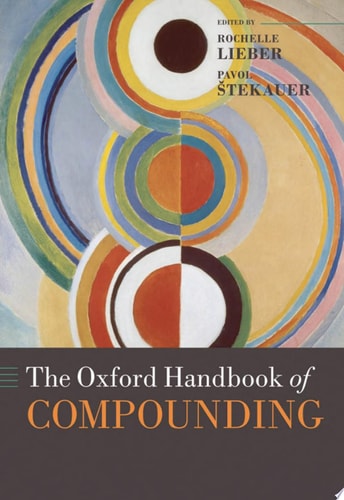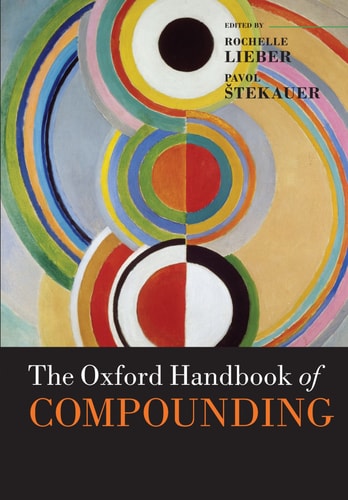
The Oxford Handbook of Compounding
0
0
As an Amazon Associate and affiliate partner, Menrva Books earns from qualifying purchases. Learn more
Author Description
This book presents a comprehensive review of theoretical work on the linguistics and psycholinguistics of compound words and combines it with a series of surveys of compounding in a variety of languages from a wide range of language families. Compounding is an effective way to create and express new meanings. Compound words are segmentable into their constituents so that new items can often be understood on first presentation. However, as keystone, keynote, and keyboard, and breadboard, sandwich-board, and mortarboard show, the relation between components is often far from straightforward. The question then arises as to how far compound sequences are analysed at each encounter and how far they are stored in the brain as single lexical items. The nature and processing of compounds thus offer an unusually direct route to how language operates in the mind, as well as providing the means of investigating important aspects of morphology, and lexical semantics, and insights to child language acquisition and the organization of the mental lexicon. This book is the first to report on the state of the art on these and other central topics, including the classification and typology of compounds, and approaches to cross-linguistic research on the subject from generative and non-generative, synchronic and diachronic perspectives.
Menrva's Summary
THE THESIS
This volume investigates the fundamental mechanisms of word compounding and the cognitive processes involved in how speakers create, process, and store compound lexical items. Editors Pavol Stekauer and Rochelle Lieber compile contributions from leading experts to examine the intersection of morphology, lexical semantics, and psycholinguistics. The text provides a rigorous framework for understanding how compound words function across diverse language families, bridging the gap between theoretical linguistics and empirical cognitive research.
THE SCOPE MAP
What You Will Find
- Comprehensive surveys of compounding structures across a wide range of global language families.
- Analysis of the mental lexicon and how compound sequences are stored versus analyzed during speech.
- Theoretical approaches including generative, non-generative, synchronic, and diachronic perspectives.
- Insights into child language acquisition and the classification and typology of compound words.
THE AUTHORITY PERSPECTIVE
Scholars and students of linguistics frequently identify this volume as a foundational reference for the study of word formation. Readers often note the high level of academic density and the exhaustive nature of the cross-linguistic data presented.
Page Count:
712
Publication Date:
2011-07-14
Publisher:
Oxford University Press
ISBN-10:
0199695725
ISBN-13:
9780199695720
Linguistics
Reference
Academic
Morphology
Psycholinguistics