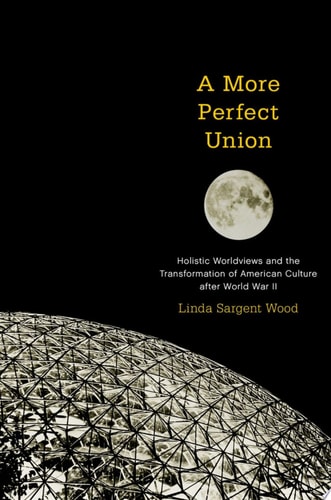
More Perfect Union
0
0
As an Amazon Associate and affiliate partner, Menrva Books earns from qualifying purchases. Learn more
Author Description
In 1962, When The Cold War Threatened To Ignite In The Cuban Missile Crisis, When More Nuclear Test Bombs Were Detonated Than In Any Other Year In History, Rachel Carson Released Her Own Bombshell, Silent Spring, To Challenge Society's Use Of Pesticides. To Counter The Use Of Chemicals--and Bombs--the Naturalist Articulated A Holistic Vision. She Wrote About A Web Of Life That Connected Humans To The World Around Them And Argued That Actions Taken In One Place Had Consequences Elsewhere. Thousands Accepted Her Message, Joined Environmental Groups, Flocked To Earth Day Celebrations, And Lobbied For Legislative Regulation. Carson Was Not The Only Intellectual To Offer Holistic Answers To Society's Problems. This Book Uncovers A Sensibility In Post-world War Ii American Culture That Both Tested The Logic Of The Cold War And Fed Some Of The Twentieth Century's Most Powerful Social Movements, From Civil Rights To Environmentalism To The Counterculture. The Study Examines Important Leaders And Institutions That Embraced And Put Into Practice A Holistic Vision For A Peaceful, Healthful, And Just World: Nature Writer Rachel Carson, Structural Engineer R. Buckminster Fuller, Civil Rights Leader Martin Luther King Jr., Jesuit Priest And Paleontologist Pierre Teilhard De Chardin, Humanistic Psychologist Abraham Maslow, And The Esalen Institute And Its Founders, Michael Murphy And Dick Price. Each Looked To Whole Systems Instead Of Parts And Focused On Connections, Interdependencies, And Integration To Create A Better World. Though The '60s Dreams Of Creating A More Perfect World Were Tempered By Economic Inequalities, Political Corruption, And Deep Social Divisions, This Holistic Sensibility Continues To Influence American Culture Today.
Menrva's Summary
THE THESIS
This book investigates the emergence and influence of a holistic sensibility in post-World War II American culture that challenged Cold War logic and shaped major social movements. Linda Sargent Wood, a historian of American culture, utilizes archival research and biographical analysis to argue that a diverse group of intellectuals and activists—ranging from Rachel Carson to Martin Luther King Jr.—promoted a vision of interconnectedness. By examining how these figures prioritized whole systems over fragmented parts, the author demonstrates how this holistic framework provided a foundation for environmentalism, civil rights, and the counterculture. The study posits that this integrative approach remains a significant, if often overlooked, force in contemporary American society.
THE SCOPE MAP
What You Will Find
- Historical analysis of the post-World War II era, specifically the 1960s.
- Biographical case studies of figures including Rachel Carson, R. Buckminster Fuller, Martin Luther King Jr., Pierre Teilhard de Chardin, and Abraham Maslow.
- Examination of institutional influences such as the Esalen Institute.
- Theoretical exploration of holistic systems thinking as a counter-narrative to Cold War reductionism.
THE AUTHORITY PERSPECTIVE
Scholars and historians recognize this work as a significant contribution to the intellectual history of the mid-twentieth century. Readers frequently note the clarity with which the author connects disparate social movements through the common thread of holistic philosophy.
Page Count:
352
Publication Date:
2010-01-01
Publisher:
Oxford University Press, Incorporated
ISBN-10:
0199703469
ISBN-13:
9780199703463
History
Philosophy
American History
Holism
United States
Social Science
Community Tags
Similar Books