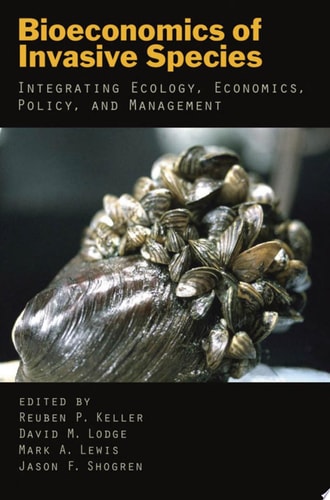
Bioeconomics of Invasive Species: Integrating Ecology, Economics, Policy, and Management
0
0
As an Amazon Associate and affiliate partner, Menrva Books earns from qualifying purchases. Learn more
Author Description
Biological Invasions Are One Of The Strongest Drivers Of Global Environmental Change, And Invasive Species Are Now Often In The Public Discourse. At The Same Time, Economists Have Begun To Take A Real Interest In Determining How Invasive Species Interact With Economic Systems, And How Invaders Should Be Controlled To Optimize Societal Wealth. Although The Work From Ecologists And Economists Have Both Greatly Expanded Our Understanding Of The Drivers And Impacts Of Invasions, Little Integration Between The Fields Has Occurred That Would Allow Managers And Policy-makers To Identify The Optical Expenditures On, For Example, Prevention And Control Of Invasive Species. Because The Level Of Effort Expended On Invasive Species Management Is Intricately Linked To The Costs And Projected Benefits Of That Management, There Is An Urgent Need For Greater Synthesis Between Ecology And Economics. This Book Brings Ecology And Economics Together In New Ways To Address How We Deal With The Dynamics And Impacts Of Invasive Species, And Is The Outcome Fo Many Years Of Collaborative Research Between A Small Group Of Economists And Ecologists. The Outcome Is Clear Demonstration Of The Utility Of Combining Ecological And Economic Models For Addressing Critical Questions In The Management Of Invasive Species.
Menrva's Summary
THE THESIS
This book investigates the critical need for integrating ecological modeling with economic analysis to optimize the management and control of invasive species. The authors, a collaborative group of ecologists and economists, argue that current environmental policy often fails because it treats biological invasions as isolated ecological problems rather than complex systems that impact societal wealth. By synthesizing data from both fields, the text provides a framework for determining optimal expenditures on prevention and control strategies.
THE SCOPE MAP
What You Will Find
- Integrated models combining ecological population dynamics with economic cost-benefit analysis.
- Methodologies for calculating optimal resource allocation for invasive species management.
- Case studies demonstrating the intersection of biological invasion drivers and economic systems.
- Policy frameworks designed to guide decision-makers in balancing environmental protection with fiscal constraints.
THE AUTHORITY PERSPECTIVE
Experts recognize this work as a foundational text for bridging the gap between environmental science and economic policy. Readers frequently note the technical density of the prose, which is intended for professionals and researchers in the field of conservation management.
Page Count:
320
Publication Date:
2009-01-01
Publisher:
Ebsco Publishing
ISBN-10:
0199709831
ISBN-13:
9780199709830
Economics
Science
Biology
Management
Ecology
Community Tags
Similar Books