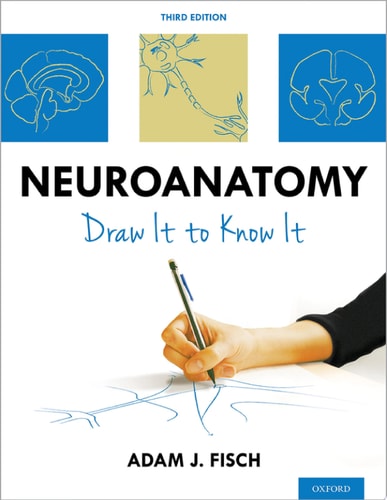
Neuroanatomy: Draw It to Know It
0
0
As an Amazon Associate and affiliate partner, Menrva Books earns from qualifying purchases. Learn more
Author Description
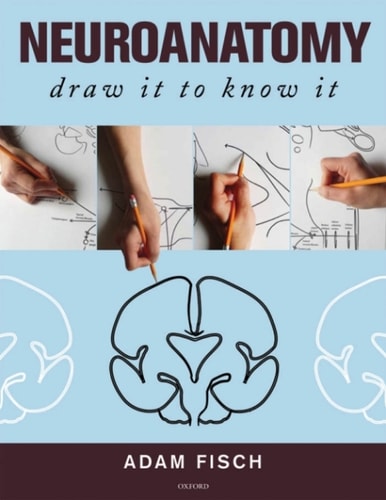
"If you can't draw it, you don't know it:" that was the rule of the late neuroanatomist William DeMyer, MD. Yet books do not encourage us to draw and redraw neuroanatomy. Neuroanatomy: Draw It to Know It teaches neuroanatomy through step-by-step instruction of how to draw neuroanatomical pathways and structures. Its instructive language is highly engaging. Users draw neuroanatomical structures and pathways in several steps so they are remembered and use mental and physical mnemonics to demonstrate difficult anatomical rotations and directional pathways. Anatomical pictures and radiographic images accompany the diagrams to clarify spatially challenging features; relevant synonyms are listed to avoid inter-text confusion; inconsistencies in the neuroanatomy literature are highlighted to mitigate frustration; and historical and current accounts of neuroanatomical systems are presented for perspective. Many neuroanatomy textbooks are great references, but fail to provide a working knowledge of neuroanatomy, and many neuroanatomy handbooks provide bedside pearls, but are too concise to be fully satisfactory. This instructional workbook teaches a comprehensive, but practical approach to neuroanatomy; it includes references where necessary but steers users toward key clinical features. Most importantly, Neuroanatomy: Draw It to Know It instructs the reader to draw and redraw the anatomy and teaches an active approach to learning.
Menrva's Summary
THE THESIS
Can the act of drawing neuroanatomical structures serve as a more effective pedagogical tool for mastering complex neurological pathways than traditional rote memorization? Dr. Adam J. Fisch argues that active engagement through illustration bridges the gap between theoretical knowledge and clinical application. By utilizing the methodology of the late William DeMyer, the text provides a structured framework that forces the student to visualize and reproduce anatomical relationships, thereby reinforcing spatial memory and conceptual understanding.
THE SCOPE MAP
What You Will Find
- Step-by-step drawing instructions for complex neuroanatomical pathways and structures.
- Integration of radiographic images and anatomical diagrams to clarify spatial orientation.
- Use of mental and physical mnemonics to simplify difficult anatomical rotations.
- Clarification of conflicting neuroanatomical literature and terminology to reduce student frustration.
THE AUTHORITY PERSPECTIVE
Experts and medical students frequently identify this work as a superior alternative to passive reading for mastering neuroanatomy. The text is highly regarded for its practical, hands-on approach that effectively translates abstract anatomical concepts into functional clinical knowledge.
Page Count:
480
Publication Date:
2009-01-01
Publisher:
Oxford University Press
ISBN-10:
0199708533
ISBN-13:
9780199708536
Education
Neuroscience
Nervous System
textbook
Anatomy
Medical
Allied Health
Health Professions
Neuroanatomy