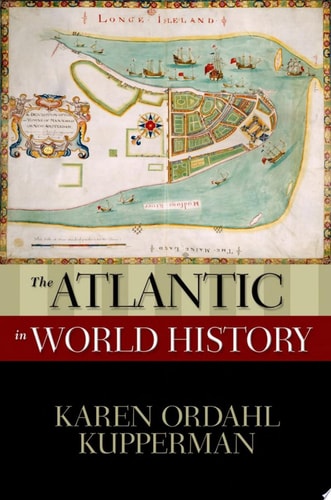
The Atlantic in World History
0
0
As an Amazon Associate and affiliate partner, Menrva Books earns from qualifying purchases. Learn more
Author Description
As Europeans Began To Move Into The Atlantic In The Late Fifteenth Century, First Encountering Islands And Then Two Continents Across The Sea, They Initiated A Process That Revolutionized The Lives Of People Everywhere. American Foods Enriched Their Diets. Furs, Precious Metals, Dyes, And Many Other Products Underwrote New Luxury Trades, And Tobacco Became The First Consumer Craze As The Price Plummeted With Ever-enlarging Production. Much Of The Technology That Made New Initiatives, Such As Sailing Out Of Sight Of Land, Possibly Drew On Asian Advances That Came Into Europe Through North Africa. Sugar And Other Crops Came Along The Same Routes, And Europeans Found American Environments Ideal For Their Cultivation. Leaders Along The African Coast Controlled The Developing Trade With Europeans, And Products From Around The Atlantic Entered African Life. As American Plantations Were Organized On An Industrial Scale, They Became Voracious Consumers Of Labor. American Indians, European Indentured Servants, And Enslaved Africans Were All Employed, And Over Time Slavery Became The Predominant Labor System In The Plantation Economies. American Indians Adopted Imported Technologies And Goods To Enhance Their Own Lives, But Diseases Endemic In The Rest Of The World To Which Americans Had No Acquired Immunity Led To Dramatic Population Decline In Some Areas. From Brazil To Canada, Indians Withdrew Into The Interior, Where They Formed Large And Powerful New Confederations. Atlantic Exchange Opened New Possibilities. All Around The Ocean, States That Had Been Marginal To The Main Centers In The Continents' Interiors Now Found Themselves At The Forefront Of Developing Trades With The Promise Of Wealth And Power. European Women And Men Whose Prospects Were Circumscribed At Home Saw Potential In Emigration. Economic Aspirations Beckoned Large Numbers, But Also, In The Maelstrom Following The Reformation, Others Sought The Chance To Worship As They Saw Fit. Many Saw Their Hopes Dash
Menrva's Summary
THE THESIS
This work investigates how the integration of the Atlantic basin into a unified system fundamentally transformed global economic, social, and political structures starting in the late fifteenth century. Karen Ordahl Kupperman, a distinguished historian of early America and the Atlantic world, utilizes a broad comparative framework to analyze the movement of goods, people, and ideas across four continents. She argues that the Atlantic was not merely a barrier but a dynamic space of exchange that reshaped the fortunes of European, African, and American societies alike. By examining the interplay of trade, labor systems, and environmental factors, the author demonstrates how this interconnectedness created a new global reality.
THE SCOPE MAP
What You Will Find
- Analysis of the transition from regional economies to a globalized Atlantic trade network.
- Examination of the shift toward plantation-based labor systems, including the rise of chattel slavery.
- Comparative study of the demographic impacts of disease and migration on indigenous American populations.
- Exploration of how Atlantic trade routes altered the power dynamics of states previously considered marginal.
THE AUTHORITY PERSPECTIVE
Historians and scholars frequently cite this work as a foundational text for understanding the interconnected nature of the early modern Atlantic world. Readers often note the clarity of the prose, which effectively synthesizes complex economic and social history into a coherent narrative for both students and general audiences.
Page Count:
168
Publication Date:
2012-01-01
Publisher:
Oxford University Press
ISBN-10:
0199713731
ISBN-13:
9780199713738
History
Economic History
Atlantic History
Colonialism
World history
Community Tags
Other Editions(2)
Similar Books











Reader Comments
Share Your Thoughts
No comments yet. Be the first to share your thoughts!