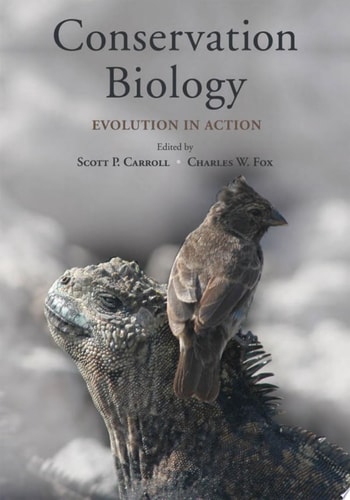
Conservation Biology
0
0
As an Amazon Associate and affiliate partner, Menrva Books earns from qualifying purchases. Learn more
Author Description
The Main Goal Of This Book Is To Encourage And Formalize The Infusion Of Evolutionary Thinking Into Mainstream Conservation Biology. It Reviews The Evolutionary Foundations Of Conservation Issues, And Unifies Conceptual And Empirical Advances In Evolutionary Conservation Biology. The Book Can Be Used Either As A Primary Textbook Or As A Supplementary Reading In An Advanced Undergraduate Or Graduate Level Course - Likely To Be Called Conservation Biology Or In Some Cases Evolutionary Ecology. The Focus Of Chapters Is On Current Concepts In Evolution As They Pertain To Conservation, And The Empirical Study Of These Concepts. The Balanced Treatment Avoids Exhaustive Reviews And Overlapping Duplication Among The Chapters. Little Background In Genetics Is Assumed Of The Reader.
Menrva's Summary
THE THESIS
This book investigates how evolutionary principles can be integrated into the practice and theory of modern conservation biology to address biodiversity loss. The authors, Charles W. Fox and Scott P. Carroll, draw upon their expertise in ecology and evolutionary biology to bridge the gap between theoretical evolutionary concepts and empirical conservation strategies. By synthesizing current research, the text provides a framework for understanding how evolutionary processes influence population viability and ecosystem resilience. The book is designed to serve as a foundational resource for students and practitioners who seek to apply evolutionary thinking to contemporary environmental challenges.
THE SCOPE MAP
What You Will Find
- Evolutionary foundations of current conservation issues
- Integration of conceptual and empirical advances in evolutionary biology
- Analysis of population genetics and adaptive potential in changing environments
- Case studies illustrating the application of evolutionary theory to species management
THE AUTHORITY PERSPECTIVE
Experts and educators frequently identify this text as a valuable resource for advanced undergraduate and graduate students due to its accessible approach to complex genetic concepts. Readers often note that the book successfully balances theoretical depth with practical application, making it a standard reference for those studying the intersection of evolution and conservation.
Page Count:
392
Publication Date:
2008-01-01
Publisher:
Oxford University Press
ISBN-10:
0199719225
ISBN-13:
9780199719228
Science
Ecology
textbook
Conservation
Biology
Evolutionary Biology
Community Tags
Similar Books