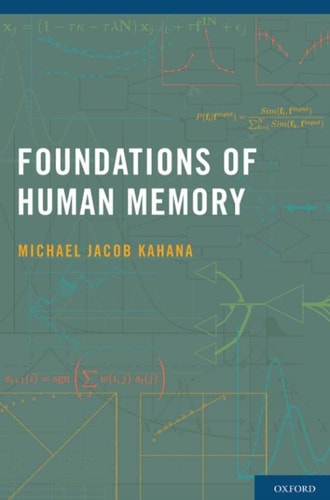
Foundations of Human Memory
0
0
As an Amazon Associate and affiliate partner, Menrva Books earns from qualifying purchases. Learn more
Author Description
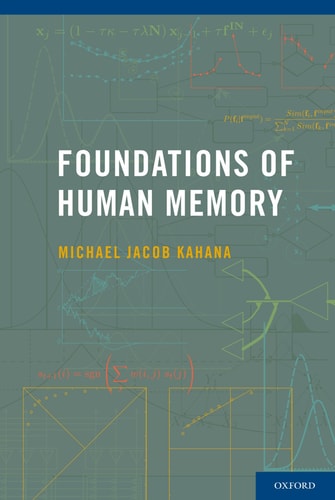
Foundations of Human Memory provides an introduction to the scientific study of human memory with an emphasis on both the major theories of memory and the laboratory studies that have been used to test those theories and inspire their further development. Written with the undergraduate student in mind, the text assumes no specific background in the subject, but a general familiarity with scientific method and quantitative approaches to the treatment of data. Foundations of human memory is organized around the major empirical paradigms used to study memory in the laboratory and the theories used to explain data obtained using those paradigms. The text begins with a focus on memory for individual items, building up to memory for associations between items, and finally to memory for entire sequences of items and the problem of memory search. Several major theories of memory are considered in detail, including strength theory, summed-similarity theory, neural network based theories, retrieved-context theory, and theories based on the division of memory into separate short-term and long-term storage systems. The text emphasizes basic research over applied problems, but brings in real-world examples and neuroscientific evidence as appropriate.
Menrva's Summary
THE THESIS
This text investigates the fundamental mechanisms of human memory by bridging the gap between empirical laboratory paradigms and the theoretical frameworks designed to explain them. Michael Jacob Kahana, a professor of psychology and neuroscience, utilizes his extensive research background to synthesize complex data into an accessible format for undergraduate students. The book argues that understanding memory requires a dual focus on the rigorous quantitative analysis of experimental results and the development of cohesive models that account for how humans store and retrieve information.
THE SCOPE MAP
What You Will Find
- Comprehensive analysis of memory paradigms including item recognition, associative memory, and serial order recall.
- Detailed evaluation of theoretical models such as strength theory, summed-similarity theory, and retrieved-context theory.
- Integration of neuroscientific evidence alongside traditional behavioral data to explain memory storage systems.
- Methodological guidance on applying the scientific method to the study of cognitive processes.
THE AUTHORITY PERSPECTIVE
Experts and educators frequently cite this text as a foundational resource for students entering the field of cognitive psychology. Readers often note the clarity of the prose, which manages to maintain academic rigor while remaining accessible to those without a specialized background in memory research.
Page Count:
368
Publication Date:
2014-01-01
Publisher:
Oxford University Press
ISBN-10:
0199715521
ISBN-13:
9780199715527
Psychology
Neuroscience
Education
textbook