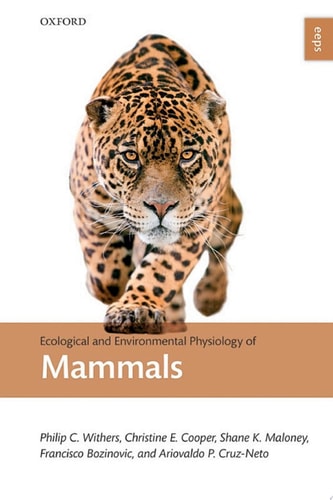
Ecological and Environmental Physiology of Mammals
0
0
As an Amazon Associate and affiliate partner, Menrva Books earns from qualifying purchases. Learn more
Author Description
Mammals are the so-called "pinnacle" group of vertebrates, successfully colonising virtually all terrestrial environments as well as the air (bats) and sea (especially pinnipeds and cetaceans). How mammals function and survive in these diverse environments has long fascinated mammologists, comparative physiologists and ecologists. Ecological and Environmental Physiology of Mammals explores the physiological mechanisms and evolutionary necessities that have made the spectacular adaptation of mammals possible. It summarises our current knowledge of the complex and sophisticated physiological approaches that mammals have for survival in a wide variety of ecological and environmental contexts: terrestrial, aerial, and aquatic. The authors have a strong comparative and quantitative focus in their broad approach to exploring mammal ecophysiology. As with other books in the Ecological and Environmental Physiology Series, the emphasis is on the unique physiological characteristics of mammals, their adaptations to extreme environments, and current experimental techniques and future research directions are also considered. This accessible text is suitable for graduate level students and researchers in the fields of mammalian comparative physiology and physiological ecology, including specialist courses in mammal ecology. It will also be of value and use to the many professional mammologists requiring a concise overview of the topic.
Menrva's Summary
THE THESIS
This text investigates the physiological mechanisms and evolutionary adaptations that allow mammals to thrive across diverse terrestrial, aerial, and aquatic environments. The authors, a team of established researchers in comparative physiology and ecology, synthesize current scientific knowledge to explain how mammals manage energy, water, and thermal regulation in extreme conditions. The book provides a quantitative framework for understanding the link between environmental pressures and the specialized biological functions of mammalian species.
THE SCOPE MAP
What You Will Find
- Comparative analysis of mammalian physiological adaptations across global habitats
- Examination of metabolic, thermoregulatory, and water balance strategies
- Discussion of experimental methodologies used in modern ecophysiology research
- Overview of evolutionary pressures shaping mammalian survival
Scope Limits
- Does not provide an exhaustive species-by-species catalog
- Focuses primarily on physiological mechanisms rather than behavioral ecology or conservation policy
THE AUTHORITY PERSPECTIVE
Experts recognize this work as a foundational resource for graduate-level study in comparative physiology and mammalian ecology. Readers frequently note the technical density of the prose, which serves as an effective reference for professional researchers and advanced students in the field.
Page Count:
606
Publication Date:
2016-01-01
Publisher:
OUP Oxford
ISBN-10:
0191092681
ISBN-13:
9780191092688
Science
Zoology
Mammals
Mammalogy
Physiology
Biology
Ecology