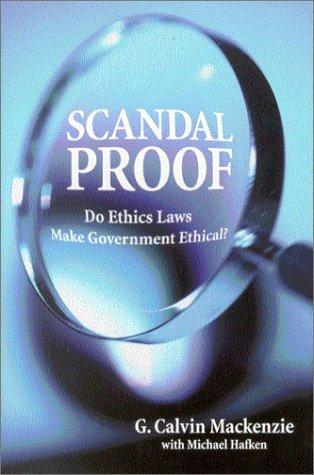
Scandal Proof
0
0
As an Amazon Associate and affiliate partner, Menrva Books earns from qualifying purchases. Learn more
Author Description
"In 1961, President John F. Kennedy signed Executive Order 10930, the first step in a long series of efforts to regulate the ethical behavior of executive branch officials. A few years later Lyndon B. Johnson required all senior officials to report assets and sources of nongovernment income to the Civil Service Commission. The reaction to Watergate opened the floodgates to more laws and rules: the Ethics in Government Act of 1978, subsequent expansions of that act in the 1980s and 1990s, and sweeping executive orders by Presidents George H. W. Bush and Bill Clinton. This book explores the process that led to the current state of ethics regulation in the federal executive branch. It assesses whether efforts to scandal proof the federal government have been successful, what they have cost, and whether reforms should be considered."--BOOK JACKET.
Menrva's Summary
THE THESIS
This book investigates the historical development and effectiveness of ethics regulations within the U.S. federal executive branch. It examines the legislative and executive actions taken since 1961, including landmark laws and executive orders, to prevent scandals among government officials. The author assesses the success of these
THE SCOPE MAP
- The historical evolution of ethics regulations in the U.S. federal executive branch, starting from President Kennedy's Executive Order 10930.
- Analysis of key legislation such as the Ethics in Government Act of 1978 and subsequent amendments.
- An assessment of the costs associated with implementing and administering ethics regulations.
- An evaluation of the success of efforts to
- scandal proof
- the federal government.
- Discussion on whether reforms to the current ethics regulatory system should be considered.
THE AUTHORITY PERSPECTIVE
The book is likely to be regarded as a thorough historical and analytical account of government ethics regulation. Its focus on the legislative and executive actions since 1961 suggests a detailed examination of policy development and its consequences. The author's assessment of the success and costs of these regulations indicates a critical perspective on the effectiveness of scandal-proofing the federal government. The work appears to be aimed at students of government, policymakers, and those interested in the history of political ethics.
Page Count:
160
Publication Date:
2002-01-01
ISBN-10:
0815754035
ISBN-13:
9780815754039
Art
History
Non-Fiction
Politics
Government
Law
Community Tags
Similar Books