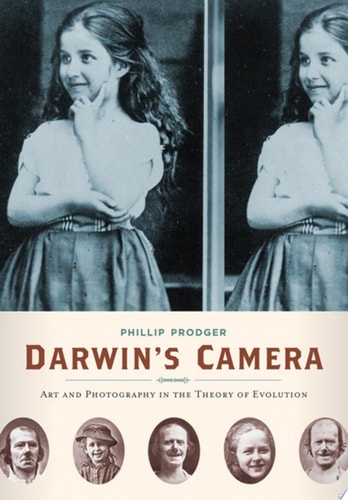
Darwin's Camera
0
0
As an Amazon Associate and affiliate partner, Menrva Books earns from qualifying purchases. Learn more
Author Description
Darwin's Camera Tells The Extraordinary Story Of How Charles Darwin Changed The Way Pictures Are Seen And Made. In His Illustrated Masterpiece, Expression Of The Emotions In Man And Animals (1871), Darwin Introduced The Idea Of Using Photographs To Illustrate A Scientific Theory--his Was The First Photographically Illustrated Science Book Ever Published. Using Photographs To Depict Fleeting Expressions Of Emotion--laughter, Crying, Anger, And So On--as They Flit Across A Person's Face, He Managed To Produce Dramatic Images At A Time When Photography Was Famously Slow And Awkward. The Book Describes How Darwin Struggled To Get The Pictures He Needed, Scouring The Galleries, Bookshops, And Photographic Studios Of London, Looking For Pictures To Satisfy His Demand For Expressive Imagery. He Finally Settled On One The Giants Of Photographic History, The Eccentric Art Photographer Oscar Rejlander, To Make His Pictures. It Was A Peculiar Choice. Darwin Was Known For His Meticulous Science, While Rejlander Was Notorious For Altering And Manipulating Photographs. Their Remarkable Collaboration Is One Of The Astonishing Revelations In Darwin's Camera. Darwin Never Studied Art Formally, But He Was Always Interested In Art And Often Drew On Art Knowledge As His Work Unfolded. He Mingled With The Artists On The Voyage Of Hms Beagle, He Visited Art Museums To Examine Figures And Animals In Paintings, Associated With Artists, And Read Art History Books. He Befriended The Celebrated Animal Painters Joseph Wolf And Briton Riviere, And Accepted The Pre-raphaelite Sculptor Thomas Woolner As A Trusted Guide. He Corresponded With Legendary Photographers Lewis Carroll, Julia Margaret Cameron, And G.-b. Duchenne De Boulogne, As Well As Many Lesser Lights. Darwin's Camera Provides The First Examination Ever Of These Relationships And Their Effect On Darwin's Work, And How Darwin, In Turn, Shaped The History Of Art.
Menrva's Summary
THE THESIS
This book investigates how Charles Darwin integrated photography into scientific discourse, fundamentally altering the relationship between visual evidence and biological theory. Phillip Prodger, a historian of science and photography, utilizes archival research and correspondence to document Darwin's unconventional methods. The work argues that Darwin's reliance on visual media, particularly his collaboration with Oscar Rejlander, bridged the gap between empirical science and artistic representation.
THE SCOPE MAP
What You Will Find
- Historical analysis of the production of 'The Expression of the Emotions in Man and Animals'.
- Examination of the collaborative relationship between Charles Darwin and photographer Oscar Rejlander.
- Documentation of Darwin's interactions with prominent 19th-century artists and photographers including Lewis Carroll and Julia Margaret Cameron.
- An exploration of how Darwin's scientific requirements influenced the evolution of photographic techniques and artistic standards.
THE AUTHORITY PERSPECTIVE
Experts recognize this work as a significant contribution to the history of science, specifically regarding the intersection of visual culture and evolutionary biology. Readers frequently note the depth of the archival research and the clarity with which the author explains the technical challenges of early photography.
Page Count:
320
Publication Date:
2009-01-01
Publisher:
Oxford University Press
ISBN-10:
0199722307
ISBN-13:
9780199722303
Photography
Non-Fiction
History
Science
Biography
Art History
Community Tags
Similar Books