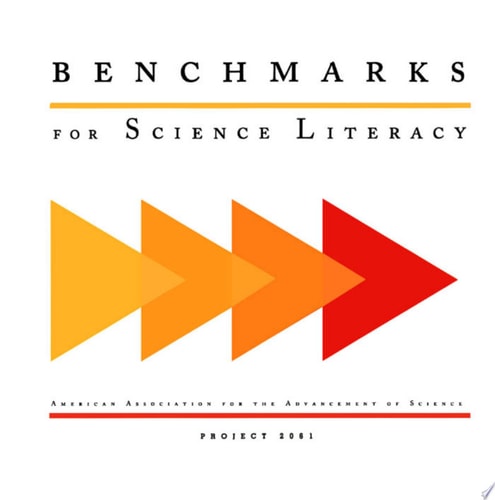
Benchmarks for Science Literacy
0
0
As an Amazon Associate and affiliate partner, Menrva Books earns from qualifying purchases. Learn more
Author Description
Published to glowing praise in 1990, Science for All Americans defined the science-literate American--describing the knowledge, skills, and attitudes all students should retain from their learning experience--and offered a series of recommendations for reforming our system of education in science, mathematics, and technology. Benchmarks for Science Literacy takes this one step further. Created in close consultation with a cross-section of American teachers, administrators, and scientists, Benchmarks elaborates on the recommendations to provide guidelines for what all students should know and be able to do in science, mathematics, and technology by the end of grades 2, 5, 8, and 12. These grade levels offer reasonable checkpoints for student progress toward science literacy, but do not suggest a rigid formula for teaching. Benchmarks is not a proposed curriculum, nor is it a plan for one: it is a tool educators can use as they design curricula that fit their student's needs and meet the goals first outlined in Science for All Americans. Far from pressing for a single educational program, Project 2061 advocates a reform strategy that will lead to more curriculum diversity than is common today. Benchmarks emerged from the work of six diverse school-district teams who were asked to rethink the K-12 curriculum and outline alternative ways of achieving science literacy for all students. These teams based their work on published research and the continuing advice of prominent educators, as well as their own teaching experience. Focusing on the understanding and interconnection of key concepts rather than rote memorization of terms and isolated facts, Benchmarks advocates building a lasting understanding of science and related fields. In a culture increasingly pervaded by science, mathematics, and technology, science literacy require habits of mind that will enable citizens to understand the world around them, make some sense of new technologies as they emerge and grow.
Menrva's Summary
THE THESIS
This work establishes a comprehensive framework for defining the specific knowledge, skills, and attitudes students should acquire in science, mathematics, and technology by key developmental milestones. Developed by the American Association for the Advancement of Science through Project 2061, the text provides a structured set of learning goals for grades 2, 5, 8, and 12. The authors argue that science literacy is a fundamental requirement for modern citizenship and propose that curricula should focus on conceptual understanding rather than the rote memorization of isolated facts.
THE SCOPE MAP
What You Will Find
- Specific learning benchmarks for science, mathematics, and technology at four distinct grade levels.
- A pedagogical framework emphasizing the interconnection of key scientific concepts.
- Research-based recommendations derived from collaborative work with diverse school-district teams.
- Strategies for designing flexible, diverse curricula that meet national literacy goals without imposing a rigid teaching formula.
THE AUTHORITY PERSPECTIVE
Educators and curriculum designers frequently cite this text as a foundational resource for aligning classroom instruction with national science literacy standards. Experts highlight the book's utility as a flexible planning tool rather than a prescriptive curriculum, noting its enduring influence on K-12 educational reform.
Page Count:
448
Publication Date:
1994-01-01
Publisher:
Oxford University Press
ISBN-10:
0199726515
ISBN-13:
9780199726516
Science
Mathematics
Reference
Education
Technology
Teaching Methods
Community Tags
Other Editions(2)
Similar Books







Reader Comments
Share Your Thoughts
No comments yet. Be the first to share your thoughts!