Wall Street
0
0
As an Amazon Associate and affiliate partner, Menrva Books earns from qualifying purchases. Learn more
Author Description
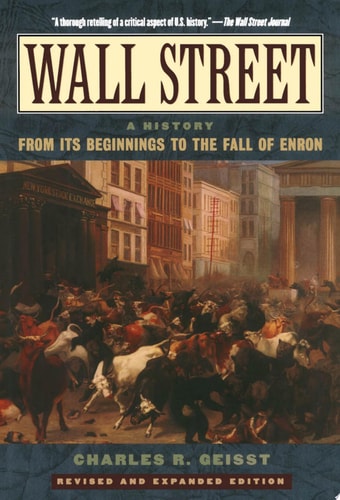
In The Seven Years Since The Publication Of The First Edition Of Wall Street, America's Financial Industry Has Undergone A Series Of Wrenching Events That Have Dramatically Changed The Nation's Economic Landscape. The Bull Market Of The 1990's Came To A Close, Ushering In The End Of The Dot Com Boom, A Record Number Of Mergers Occurred, And Accounting Scandals In Companies Like Enron And Worldcom Shook The Financial Industry To Its Core. In This Wide-ranging Volume, Financial Historian Charles Geisst Provides The First History Of Wall Street, Explaining How A Small, Concentrated Pocket Of Lower Manhattan Came To Have Such Enormous Influence In National And World Affairs. In This Updated Edition, Geisst Sums Up The Recent Turbulence That Has Threatened America's Financial Industry. He Shows How In 1997 Thirty Nasdaq Market Makers Paid A Record $1.3 Billion Fine For Price Irregularities In Stocks. He Makes Sense Of The Closing Of The Bull Market, And Explains A Major Change In The Accounting Rules For Mergers That Caused Monumental Losses For Companies Like Aol Time Warner. And He Recounts How In The Aftermath Of The Speculative Fever That Swept Wall Street In The 1990's, The Scandals At Enron, Tyco, Worldcom, And Conseco Represent A Last Gasp Of Mergermania And A Fallout From A Bubble-like Market. Wall Street Is At Once The Story Of The Street Itself, From The Days When The Wall Was Merely A Defensive Barricade Built By Peter Stuyvesant, To The Modern Billion-dollar Computer-driven Colossus Of Today. In A Broader Sense It Is An Engaging Economic History Of The United States, The Role Wall Street Played In Making America The Most Powerful Economy In The World, And The Many Challenges To That Role It Has Faced In Recent Years.
Menrva's Summary
THE THESIS
This book investigates the historical evolution of Wall Street from its origins as a colonial defensive barrier to its status as a global financial colossus, questioning how a small district in Manhattan attained such profound influence over national and international affairs. Financial historian Charles R. Geisst utilizes his expertise to synthesize the economic shifts of the late 20th and early 21st centuries. He argues that the financial industry's development is inextricably linked to the broader economic trajectory of the United States, highlighting how speculative bubbles and regulatory failures have repeatedly reshaped the landscape. The text provides a comprehensive framework for understanding the cyclical nature of market booms and the subsequent fallout from corporate scandals.
THE SCOPE MAP
What You Will Find
- A chronological history of the financial district from the era of Peter Stuyvesant to the modern computer-driven market.
- Analysis of the dot com boom, the subsequent market correction, and the impact of major corporate accounting scandals.
- Examination of regulatory changes and the legal consequences for market makers involved in price irregularities.
- An assessment of the role of mergers and acquisitions in defining the economic power of the United States.
THE AUTHORITY PERSPECTIVE
Experts and historians frequently cite this work as a foundational text for understanding the structural history of American finance. Readers often note the academic density of the prose, which provides a thorough, well-documented account of the Street's transformation over several centuries.
Page Count:
416
Publication Date:
1997-01-01
Publisher:
Oxford University Press
ISBN-10:
0199723079
ISBN-13:
9780199723072
History
Economics
Business
Finance
Community Tags
Other Editions(2)
Similar Books