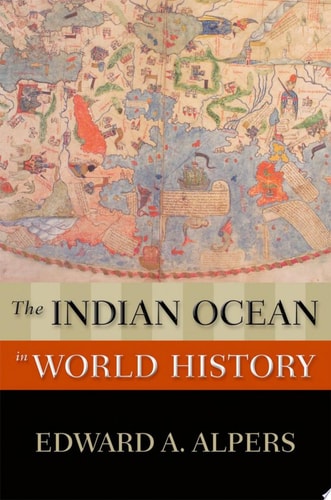
Indian Ocean in World History
0
0
As an Amazon Associate and affiliate partner, Menrva Books earns from qualifying purchases. Learn more
Author Description
The Indian Ocean Remains The Least Studied Of The World's Geographic Regions. Yet There Have Been Major Cultural Exchanges Across Its Waters And Around Its Shores From The Third Millennium B.c.e. To The Present Day. Historian Edward A. Alpers Explores The Complex Issues Involved In Cultural Exchange In The Indian Ocean Rim Region Over The Course Of This Long Period Of Time By Combining A Historical Approach With The Insights Of Anthropology, Art History, Ethnomusicology, And Geography. The Indian Ocean Witnessed Several Significant Diasporas During The Past Two Millennia, Including Migrations Of Traders, Indentured Laborers, Civil Servants, Sailors, And Slaves Throughout The Entire Basin. Persians And Arabs From The Gulf Came To Eastern Africa And Madagascar As Traders And Settlers, While Hadramis Dispersed From South Yemen As Traders And Muslim Teachers To The Comoro Islands, Zanzibar, South India, And Indonesia. Southeast Asians Migrated To Madagascar, And Chinese Dispersed From Southeast Asia To The Mascarene Islands To South Africa. Alpers Also Explores The Cultural Exchanges That Diasporas Cause, Telling Stories Of Identity And Cultural Transformation Through Language, Popular Religion, Music, Dance, Art And Architecture, And Social Organization. For Example, Architectural And Decorative Styles In Eastern Africa, The Red Sea, The Hadramaut, The Persian Gulf, And Western India Reflect Cultural Interchanges In Multiple Directions. Similarly, The Popular Musical Form Of Taarab In Zanzibar And Coastal East Africa Incorporates Elements Of Arab, Indian, And African Musical Traditions, While The Characteristic Frame Drum (ravanne) Of Séga, The Widespread Afro-creole Dance Of The Mascarene And Seychelles Islands, Probably Owes Its Ultimate Origins To Arabia By Way Of Mozambique. The Indian Ocean In World History Also Discusses Issues Of Trade And Production That Show The Long History Of Exchange Throughout The Indian Ocean World; Politics And Empire-building By Both Re
Menrva's Summary
THE THESIS
How have cultural exchanges and diasporic movements across the Indian Ocean shaped the historical development of the surrounding regions from the third millennium B.C.E. to the present? Historian Edward A. Alpers utilizes a multidisciplinary framework, integrating historical analysis with anthropology, art history, ethnomusicology, and geography to examine the Indian Ocean rim. By focusing on the movement of traders, laborers, and settlers, Alpers argues that this region has functioned as a critical site of identity formation and cultural transformation throughout human history.
THE SCOPE MAP
What You Will Find
- Analysis of major historical diasporas including traders, indentured laborers, and enslaved populations across the Indian Ocean basin.
- Examination of cultural synthesis in art, architecture, and music, such as the development of Taarab and Séga.
- Investigation of trade networks and political empire-building spanning from East Africa to Southeast Asia.
- Case studies on the migration patterns of Persians, Arabs, Hadramis, and Chinese populations within the region.
THE AUTHORITY PERSPECTIVE
Scholars recognize this work as a significant contribution to the field of Indian Ocean studies due to its broad temporal scope and interdisciplinary methodology. Readers frequently note the accessibility of the prose, which effectively synthesizes complex historical data for both academic and general audiences.
Page Count:
183
Publication Date:
2013-01-01
Publisher:
Oxford University Press, Incorporated
ISBN-10:
0199721793
ISBN-13:
9780199721795
History
Geography
World history
Anthropology
Community Tags
Similar Books