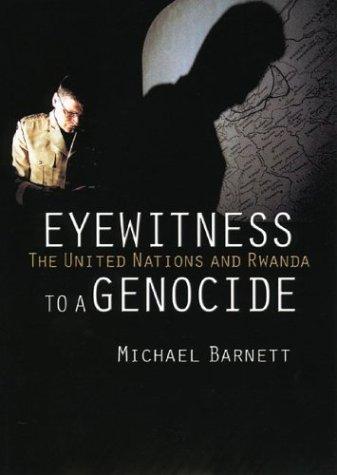
Eyewitness to a Genocide
0
0
As an Amazon Associate and affiliate partner, Menrva Books earns from qualifying purchases. Learn more
Author Description
"Why was the UN a bystander during the Rwandan genocide? Do its sins of omission leave it morally responsible for the hundreds of thousands of dead? Michael Barnett, who was a political officer at the U.S. Mission to the United Nations from 1993 to 1994, covered Rwanda during much of the period of the genocide. Based on his first-hand experiences, careful research, and interviews with many key participants, he reconstructs the history of the UN's involvement in Rwanda. In the weeks leading up to the genocide, the author shows, the UN was increasingly aware or had good reason to suspect that Rwanda was a site of crimes against humanity. Yet it failed to act. Barnett argues that its indifference was driven not by incompetence or cynicism but rather by reasoned choices underlain by moral considerations. Employing a novel approach to ethics in practice and in relationship to international organizations, Barnett offers an unsettling possibility: the bureaucratic culture of the UN recast the ethical commitments of well-intentioned individuals, arresting any duty to aid at the outset of the genocide. Barnett argues that the UN bears some moral responsibility for the genocide. Particularly disturbing is his observation that not only did the UN violate its moral responsibilities, but also many in New York believed they were "doing the right thing." Barnett addresses the ways in which the Rwandan genocide raises a warning about this age of humanitarianism and concludes by asking whether it is possible to build moral institutions."--BOOK JACKET.
Menrva's Summary
THE THESIS
The United Nations' inaction during the Rwandan genocide raises profound ethical questions about institutional responsibility and moral choice. Michael Barnett, drawing on his firsthand experience as a political officer at the U.S. Mission to the UN and extensive research, reconstructs the UN's response to the unfolding atrocities. He argues that the UN's failure to act was not due to incompetence but to reasoned choices influenced by moral considerations and a bureaucratic culture that ultimately arrested any duty to intervene. The book explores the disturbing paradox of individuals within the UN believing they were acting ethically while the organization remained a bystander to mass death.
THE SCOPE MAP
- Analysis of the UN's awareness of impending crimes against humanity in Rwanda prior to the genocide.
- Reconstruction of the UN's decision-making processes and the moral considerations influencing inaction.
- Examination of the bureaucratic culture within the UN and its impact on individual ethical commitments.
- First-hand accounts and interviews with key participants in the events.
- Exploration of the UN's moral responsibility for the hundreds of thousands of deaths.
- Discussion of the Rwandan genocide as a warning for the current age of humanitarianism.
- Inquiry into the possibility of building moral institutions capable of effective intervention.
THE AUTHORITY PERSPECTIVE
Michael Barnett's "Eyewitness to a Genocide" is regarded as a critical examination of the United Nations' role during the Rwandan genocide. The book is noted for its detailed reconstruction of events, drawing on the author's direct experience and interviews with key figures. Barnett's central argument posits that the UN's inaction stemmed from reasoned, albeit flawed, moral choices within its bureaucratic structure, leading to a profound sense of institutional responsibility for the atrocities. The work serves as a somber reflection on the challenges of international intervention and the ethical complexities faced by global organizations.
Page Count:
215
Publication Date:
2002-01-01
ISBN-10:
0801438837
ISBN-13:
9780801438837
Politics
Science
Non-Fiction
History
Community Tags
Similar Books