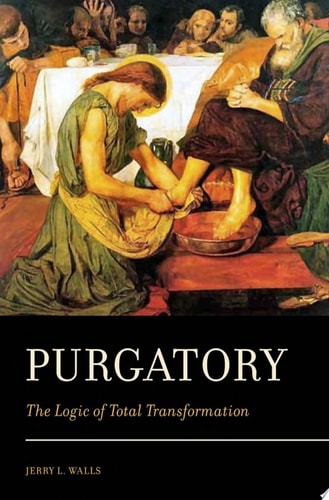
Purgatory: The Logic of Total Transformation
0
0
As an Amazon Associate and affiliate partner, Menrva Books earns from qualifying purchases. Learn more
Author Description
Jerry L. Walls, the author of books on hell and heaven, completes his tour of the afterlife with a philosophical and theological exploration and defense of purgatory, the traditional teaching that most Christians require a period of postmortem cleansing and purging of their sinful dispositions and imperfections before they will be fully made ready for heaven. He examines Protestant objections to the doctrine and shows that the doctrine of purgatory has been construed in different ways, some of which are fully compatible with Protestant theology. In particular, while purgatory has often been understood as matter of punishment in order to make satisfaction for sins that have not been fully remitted, it can also be seen as the completion of the sanctification process, an account of the doctrine that is fully consistent with the Protestant doctrine of justification by faith. Purgatory assumes not only continuity of personal identity but also gradual moral and spiritual growth between death and resurrection. Different theories of personal identity are examined and assessed in light of these assumptions. Walls also shows that the traditional doctrine of purgatory is not understood as a second chance for salvation, but goes on to argue that it should be modified to allow for postmortem repentance. He concludes with an examination of C.S. Lewis's writings on purgatory, and suggests that Lewis can be a model for evangelicals and other Protestants to engage the doctrine of purgatory in a way that is true to their theology.
Menrva's Summary
THE THESIS
This work investigates the theological and philosophical viability of purgatory as a necessary process of postmortem sanctification for the Christian believer. Jerry L. Walls, a scholar specializing in afterlife studies, utilizes a framework of analytic philosophy and historical theology to argue that purgatory is compatible with Protestant doctrines of justification. By distinguishing between punitive satisfaction and moral growth, the author constructs a defense that challenges traditional sectarian boundaries regarding the state of the soul after death.
THE SCOPE MAP
What You Will Find
- Philosophical analysis of personal identity and moral continuity between death and resurrection.
- A comparative study of Protestant objections versus potential theological compatibility.
- Examination of the distinction between purgatory as punishment and purgatory as sanctification.
- A critical assessment of C.S. Lewis’s writings as a model for evangelical engagement with the doctrine.
THE AUTHORITY PERSPECTIVE
Scholars and theologians identify this text as a significant contribution to ecumenical dialogue regarding eschatology. Readers frequently note the academic density of the prose, which requires a foundational understanding of systematic theology to fully grasp the author's arguments.
Page Count:
232
Publication Date:
2011-12-01
Publisher:
Oxford University Press
ISBN-10:
0199732299
ISBN-13:
9780199732296
Philosophy
Religion
Eschatology
Purgatory
Theology
Christianity
Community Tags
Other Editions(2)

Similar Books