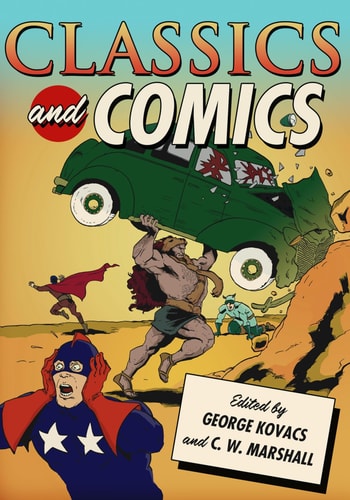
Classics and Comics
0
0
As an Amazon Associate and affiliate partner, Menrva Books earns from qualifying purchases. Learn more
Author Description
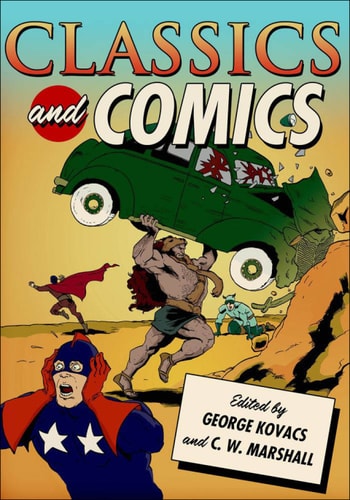
Since at least 1939, when daily-strip caveman Alley Oop time-traveled to the Trojan War, comics have been drawing (on) material from Greek and Roman myth, literature and history. At times the connection is cosmetic-as perhaps with Wonder Woman's Amazonian heritage-and at times it is almost irrelevant-as with Hercules' starfaring adventures in the 1982 Marvel miniseries. But all of these make implicit or explicit claims about the place of classics in modern literary culture.Classics and Comics is the first book to explore the engagement of classics with the epitome of modern popular literature, the comic book. This volume collects sixteen articles, all specially commissioned for this volume, that look at how classical content is deployed in comics and reconfigured for a modern audience. It opens with a detailed historical introduction surveying the role of classical material in comics since the 1930s. Subsequent chapters cover a broad range of topics, including the incorporation of modern theories of myth into the creation and interpretation of comic books, the appropriation of characters from classical literature and myth, and the reconfiguration of motif into a modern literary medium. Among the well-known comics considered in the collection are Frank Miller's 300 and Sin City, DC Comics' Wonder Woman, Jack Kirby's The Eternals, Neil Gaiman's Sandman, and examples of Japanese manga. The volume also includes an original 12-page "comics-essay," drawn and written by Eisner Award-winning Eric Shanower, creator of the graphic novel series Age of Bronze.
Menrva's Summary
THE THESIS
This volume investigates the intersection of classical antiquity and modern comic book culture, questioning how ancient myths and history are reconfigured for contemporary audiences. Editors C. W. Marshall and George Kovacs compile sixteen original essays that examine the appropriation of Greek and Roman motifs within the medium of comics. The work provides a scholarly framework for understanding how classical content functions as both a narrative device and a cultural signifier in popular literature.
THE SCOPE MAP
What You Will Find
- A comprehensive historical survey of classical material in comics from the 1930s to the present.
- Analysis of specific works including Frank Miller's 300, Wonder Woman, and Neil Gaiman's Sandman.
- Theoretical applications of myth studies to the interpretation of graphic narratives.
- An original comics-essay by Eisner Award-winner Eric Shanower.
THE AUTHORITY PERSPECTIVE
Scholars and critics identify this collection as a foundational text for those studying the reception of classical antiquity in modern media. Readers frequently note the academic rigor of the essays, which successfully bridge the gap between classical philology and popular culture studies.
Page Count:
288
Publication Date:
2011-02-10
Publisher:
Oxford University Press
ISBN-10:
0199734194
ISBN-13:
9780199734191
Non-Fiction
History
Literary Criticism
Comics
Community Tags
Other Editions(4)
Similar Books







Reader Comments
Share Your Thoughts
No comments yet. Be the first to share your thoughts!