The Andes: A Cultural History
0
0
As an Amazon Associate and affiliate partner, Menrva Books earns from qualifying purchases. Learn more
Author Description
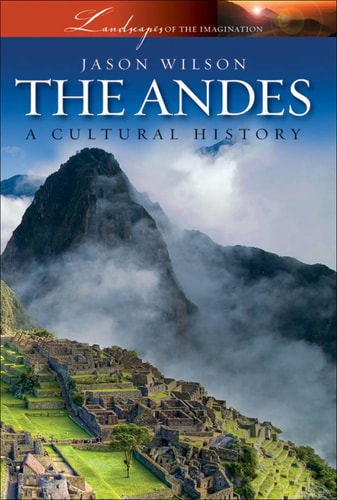
The Andes form the backbone of South America. Irradiating from Cuzco--the symbolic “navel” of the indigenous world--the mountain range was home to an extraordinary theocratic empire and civilization, the Incas, who built stone temples, roads, palaces, and forts. The clash between Atahualpa, the last Inca, and the illiterate conquistador Pizarro, between indigenous identity and European mercantile values, has forged Andean culture and history for the last 500 years.Jason Wilson explores the 5,000-mile chain of volcanoes, deep valleys, and upland plains, revealing the Andes' mystery, inaccessibility, and power through the insights of chroniclers, scientists, and modern-day novelists. His account starts at sacred Cuzco and Machu Picchu, moves along imagined Inca routes south to Lake Titicaca, La Paz, Potosí, and then follows the Argentine and Chilean Andes to Patagonia. It then moves north through Chimborazo, Quito, and into Colombia, along the Cauca Valley up to Bogotá and east to Caracas. Looking at the literature inspired by the Andes as well as its turbulent history, this book brings to life the region's spectacular landscapes and the many ways in which they have been imagined.
Menrva's Summary
THE THESIS
How has the physical geography of the Andes mountain range shaped the cultural, political, and literary identity of South America over the last five centuries? Jason Wilson, an expert in Latin American literature and history, synthesizes historical accounts, scientific observations, and literary representations to examine the region. He argues that the Andes function not merely as a geological feature, but as a central, symbolic force that has defined the tension between indigenous heritage and colonial influence. By tracing the mountain chain from Patagonia to Colombia, Wilson constructs a framework that links the physical landscape to the collective imagination of the people who inhabit it.
THE SCOPE MAP
What You Will Find
- A comprehensive historical survey of the Andean region from the Inca Empire to the modern era.
- Analysis of the cultural impact of the conflict between indigenous civilizations and European conquistadors.
- Examination of literary and artistic works inspired by the unique topography of the Andes.
- A geographic progression through key sites including Cuzco, Machu Picchu, Lake Titicaca, and the Cauca Valley.
THE AUTHORITY PERSPECTIVE
Scholars and readers frequently praise this work for its ability to blend rigorous historical research with a deep appreciation for the literary traditions of the region. It is widely regarded as a foundational text for those seeking to understand the intersection of Andean geography and cultural identity.
Page Count:
284
Publication Date:
2009-01-01
Publisher:
Oxford University Press
ISBN-10:
0199745838
ISBN-13:
9780199745838
Travel
History
South America
American History
Geography
Community Tags
Similar Books