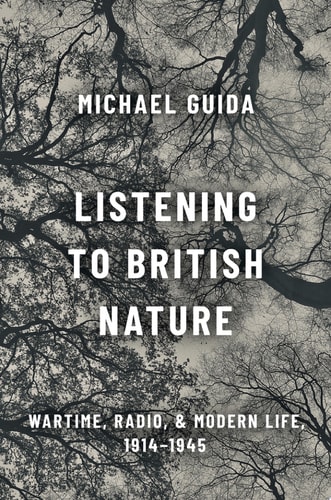
Listening to British Nature: Wartime, Radio, and Modern Life, 1914-1945
0
0
As an Amazon Associate and affiliate partner, Menrva Books earns from qualifying purchases. Learn more
Author Description
Listening to British Nature: Wartime, Radio, and Modern Life, 1914-1945 reveals for the first time how the sounds and rhythms of the natural world were listened to, interpreted and used amid the pressures of early twentieth century life. The book argues that despite and sometimes because of the chaos of wartime and the struggle to recover, nature's voices were drawn close to provide security and engender optimism. Nature's sonic presences were not obliterated by machine age noise, the advent of radio broadcasting or the rush of the urban everyday, rather they came to complement and provide alternatives to modern modes of living. This book examines how trench warfare demanded the creation of new listening cultures to understand danger and to imagine survival. It tells of the therapeutic communities who made use of nature's quietude and the rhythms of rural work to restore shell-shocked soldiers, and of ramblers who sought to immerse themselves in the sensualities of the outdoors. It reveals how home-front listening during the Blitz was punctuated by birdsong, broadcast by the BBC. To listen to nature during this period was to cultivate an intimate connection with its energies and to sense an enduring order and beauty that could be taken into the future. Listening to nature was a way of being modern.
Menrva's Summary
THE THESIS
How did the sonic presence of the natural world influence the psychological and cultural landscape of Britain during the turbulent years of 1914 to 1945? Michael Guida, a scholar of sound and cultural history, investigates the intersection of nature, technology, and human experience during the World Wars. He argues that rather than being drowned out by industrialization and conflict, the sounds of nature were actively sought out and integrated into modern life as a source of stability, therapy, and optimism. By analyzing archival records and cultural artifacts, the author demonstrates that listening to the environment was a deliberate, modern practice used to navigate the stresses of wartime and recovery.
THE SCOPE MAP
What You Will Find
- Analysis of soundscapes in trench warfare and the development of new listening cultures for survival.
- Examination of therapeutic practices using rural quietude for shell-shocked veterans.
- Historical accounts of BBC broadcasting and the role of birdsong during the Blitz.
- Exploration of the rambler movement and the sensory experience of the British outdoors.
Scope Limits
- The study focuses specifically on the British experience between 1914 and 1945.
- The text does not provide a comprehensive history of radio technology, focusing instead on its cultural application regarding nature.
THE AUTHORITY PERSPECTIVE
Scholars in the field of sound studies and environmental history recognize this work as a nuanced contribution to the understanding of sensory history. Readers frequently note the academic rigor of the prose and the author's ability to synthesize disparate historical threads into a cohesive argument about modern identity.
Page Count:
227
Publication Date:
2021-01-01
Publisher:
Oxford University Press
ISBN-10:
0190085568
ISBN-13:
9780190085568
History
British History
Music History
Media Studies
Environmental History
Sound Studies
Humanities
Cultural History
Community Tags
Similar Books