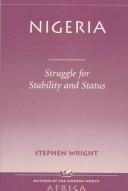
Nigeria
0
0
As an Amazon Associate and affiliate partner, Menrva Books earns from qualifying purchases. Learn more
Author Description
In this book, Stephen Wright explores a wide range of issues that have arisen since Nigerian independence in 1960 and also seeks to explain the policies and pitfalls of successive military and civilian governments. Two key themes underpin and bring focus to the text, namely Nigeria's dual struggles for stability and status. Taking into consideration that military governments have held power in Nigeria for all but four years since 1966, the book offers a critical examination of the permutations of government since 1960 and the social, political, and economic factors influencing events. In addition, Wright provides an assessment of current efforts to re-civilianize and (re)democratize the country. The struggle for status is a more subtle issue, centering on Nigeria's pursuit of recognition as the "leader" of Africa. An analysis of the country's foreign policy and position within the international system illuminates the difficulties in achieving this aspiration. The author explores these and other critical themes, providing a clear understanding of Nigerian political economy since 1960 and the challenges Nigeria faces in the closing years of this century.
Menrva's Summary
THE THESIS
This book critically examines Nigeria's post-independence political and economic trajectory, focusing on the nation's persistent struggles for stability and international status. Stephen Wright, drawing on his expertise, analyzes the complex interplay of social, political, and economic factors that have shaped Nigeria's governance since 1960. The work scrutinizes the policies and challenges faced by successive military and civilian administrations, alongside Nigeria's foreign policy aspirations to be recognized as a continental leader. Wright also assesses contemporary efforts toward re-civilianization and democratization, offering insights into the nation's political economy and its future challenges.
THE SCOPE MAP
- Analysis of Nigerian political and economic history from 1960 to the late 20th century.
- Examination of the impact of military and civilian governments on national stability.
- Assessment of Nigeria's foreign policy and its pursuit of leadership status in Africa.
- Discussion of social, political, and economic factors influencing Nigerian events.
- Evaluation of efforts towards re-civilianization and democratization.
THE AUTHORITY PERSPECTIVE
This book is recognized for its comprehensive analysis of Nigeria's post-independence era, providing a detailed account of its political and economic development. The work is noted for its critical examination of governance structures and the persistent challenges Nigeria has faced in achieving both internal stability and external recognition. Wright's assessment of foreign policy and democratization efforts offers valuable context for understanding the nation's complex trajectory. The book serves as a significant resource for those seeking to comprehend Nigeria's political economy and its position on the global stage.
Page Count:
188
Publication Date:
1998-01-01
ISBN-10:
0813321409
History
Politics
Non-Fiction
Economics
Community Tags
Similar Books














