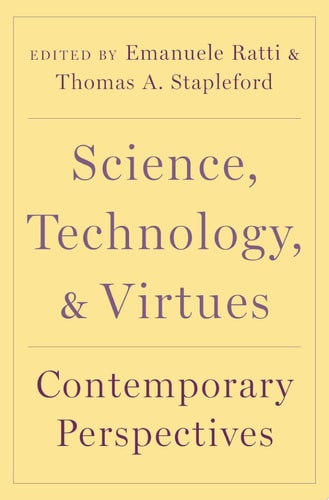
Science, Technology, and Virtues: Contemporary Perspectives
0
0
As an Amazon Associate and affiliate partner, Menrva Books earns from qualifying purchases. Learn more
Author Description
Virtues have become a valuable and relevant resource for understanding modern science and technology. Scientific practice requires not only following prescribed rules but also cultivating judgment, building mental habits, and developing proper emotional responses. The rich philosophical traditions around virtue can provide key insights into scientific research, including understanding how daily practice shapes scientists themselves and how ethical dilemmas created by modern scientific research and technology should be navigated.Science, Technology, and Virtues gathers both new and eminent scholars to show how concepts of virtue can help us better understand, construct, and use the products of modern science and technology. Contributors draw from examples across philosophy, history, sociology, political science, and engineering to explore how virtue theory can help orient science and technology towards the pursuit of the good life. Split into four major sections, this volume covers virtues in science, technology, epistemology, and research ethics, with individual chapters discussing applications of virtues to scientific practice, the influence of virtue ethics on socially responsible research, and the concept of "failing well" within the scientific community. Rather than offer easy solutions, the essays in this volume instead illustrate how virtue concepts can provide a productive and illuminating perspective on two phenomena at the core of modern life.Fresh and thought-provoking, Science, Technology, and Virtues presents a pluralistic set of scholarship to show how virtue concepts can enrich our understanding of scientific research, guide the design and use of new technologies, and shape how we envision future scientists, engineers, consumers, and citizens.
Menrva's Summary
THE THESIS
This volume investigates how the application of virtue ethics can provide a framework for navigating the moral and practical challenges inherent in contemporary scientific research and technological development. Editors Emanuele Ratti and Thomas A. Stapleford curate a collection of essays from diverse academic fields, including history, sociology, and engineering. The contributors argue that scientific practice relies on more than technical adherence to rules; it requires the cultivation of specific intellectual and moral habits to orient research toward the common good.
THE SCOPE MAP
What You Will Find
- Analysis of virtue ethics applied to scientific epistemology and research methodology
- Explorations of how daily laboratory practices shape the character of scientists
- Case studies on the intersection of engineering design and social responsibility
- Discussions on the concept of failing well within professional scientific communities
Scope Limits
- The text does not provide a singular, unified moral code for all scientific disciplines
- It avoids offering simplistic solutions to complex ethical dilemmas in technology
THE AUTHORITY PERSPECTIVE
Scholars and practitioners in the field of science and technology studies view this collection as a significant contribution to the integration of classical virtue theory into modern professional ethics. Readers frequently note the academic density of the prose, which serves as a rigorous resource for those interested in the intersection of philosophy and empirical research.
Page Count:
312
Publication Date:
2021-11-17
Publisher:
Oxford University Press
ISBN-10:
0190081716
ISBN-13:
9780190081713
Philosophy
Virtue Ethics
Research
Technology Studies
Sociology of Science
Science
Technology philosophy
Ethics
Community Tags
Similar Books