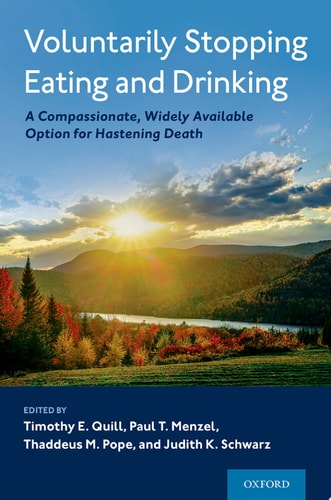
Voluntarily Stopping Eating and Drinking: A Compassionate, Widely-Available Option for Hastening Death
0
0
As an Amazon Associate and affiliate partner, Menrva Books earns from qualifying purchases. Learn more
Author Description
In the 21st century, people in the developed world are living longer. They hope they will have a healthy longer life and then die relatively quickly and peacefully. But frequently that does not happen. While people are living healthy a little longer, they tend to live sick for a lot longer. And at the end of being sick before dying, they and their families are frequently faced with daunting decisions about whether to continue life prolonging medical treatments or whether to find meaningful and forthright ways to die more easily and quickly.In this context, some people are searching for more and better options to hasten death. They may be experiencing unacceptable suffering in the present or may fear it in the near future. But they do not know the full range of options legally available to them. Voluntary stopping eating and drinking (VSED), though relatively unknown and poorly understood, is a widely available option for hastening death. VSED is legally permitted in places where medical assistance in dying (MAID) is not. And unlike U.S. jurisdictions where MAID is legally permitted, VSED is not limited to terminal illness or to those with current decision-making capacity.VSED is a compassionate option that respects patient choice. Despite its strongly misleading image of starvation, death by VSED is typically peaceful and meaningful when accompanied by adequate clinician and/or caregiver support. Moreover, the practice is not limited to avoiding unbearable suffering, but may also be used by those who are determined to avoid living with unacceptable deterioration such as severe dementia. But VSED is "not for everyone."This volume provides a realistic, appropriately critical, yet supportive assessment of the practice. Eight illustrative, previously unpublished real cases are included, receiving pragmatic analysis in each chapter. The volume's integrated, multi-professional, multi-disciplinary character makes it useful for a wide range of readers: patients considering present or future end-of-life options and their families, clinicians of all kinds, ethicists, lawyers, and institutional administrators. Appendices include recommended elements of an advance directive for stopping eating and drinking in one's future if and when decision making capacity is lost, and what to record as cause of death on the death certificates of those who hasten death by VSED.
Menrva's Summary
THE THESIS
This volume investigates the clinical, legal, and ethical dimensions of Voluntarily Stopping Eating and Drinking (VSED) as a viable method for hastening death. The authors, a multidisciplinary team of experts in bioethics, law, and palliative medicine, provide a comprehensive framework for understanding VSED. They argue that while the practice is often misunderstood, it serves as a legally available and compassionate alternative to medical assistance in dying, particularly for those who do not meet the strict criteria of terminal illness or decision-making capacity requirements.
THE SCOPE MAP
What You Will Find
- Clinical protocols for managing symptoms during the VSED process
- Legal analysis of VSED across various jurisdictions
- Eight detailed, previously unpublished case studies
- Ethical considerations regarding patient autonomy and caregiver support
Scope Limits
- The text does not provide a universal recommendation for all patients
- It does not serve as a substitute for individualized legal or medical counsel
THE AUTHORITY PERSPECTIVE
Experts in bioethics and palliative care recognize this volume as a foundational resource for navigating the complexities of end-of-life decision-making. Readers frequently note the balance between clinical rigor and compassionate prose, making it a standard reference for both practitioners and families facing these difficult choices.
Page Count:
307
Publication Date:
2021-01-01
Publisher:
Oxford University Press
ISBN-10:
0190080760
ISBN-13:
9780190080761
Gerontology
Allied Health
Medical Ethics
Medical
Bioethics
Health Law
End of Life
Community Tags
Similar Books




Reader Comments
Share Your Thoughts
No comments yet. Be the first to share your thoughts!