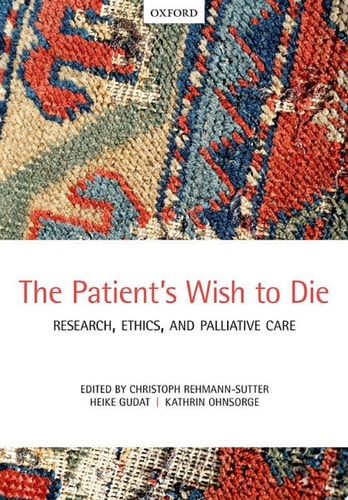
The Patient's Wish to Die: Research, Ethics, and Palliative Care
0
0
As an Amazon Associate and affiliate partner, Menrva Books earns from qualifying purchases. Learn more
Author Description
Wish to die statements are becoming a frequent phenomenon in terminally ill patients. Those confronted by these statments need to understand the complexity of such wishes, so they can respond competently and compassionately to the requests. If misunderstood, the statements can be taken at face-value and the practitioner may not recognise that a patient is in fact experiencing ambivalent feelings at the end of life, or they may misinterpret the expressed wish to die as a sign of clinical depression. Public debate about the morality and ethics of various end-of-life care options has exploded in recent years. However, it has never been sensitive to the finer aspects of clinical reality or the experiences of patients. The Patient's Wish to Die: Research, Ethics, and Palliative Care brings together that reality and the patient's voice, combining them with different research approaches. It presents the best available knowledge and research methodologies about patients' wishes at the end-of-life, together with a series of ethical views and a discussion about the clinical implications for palliative care. The book presents material in an open and unbiased manner whilst remaining sensitive to the spiritual and existential dimensions of dying, and to the different cultural views that provide meaning to the individual. Written by the best specialists and ethics scholars from around the world, including palliative care practitioners and end-of-life scholars from countries where assisted dying practices are legalized and from those where it isn't, The Patient's Wish to Die: Research, Ethics, and Palliative Care will prove essential reading for all those working or studying in the field of palliative care.
Menrva's Summary
THE THESIS
This book investigates the complex clinical, ethical, and existential dimensions of terminally ill patients who express a wish to die. The authors, a multidisciplinary team of ethics scholars and palliative care practitioners, synthesize international research to provide a framework for understanding these statements beyond simple clinical depression or literal requests. By integrating patient narratives with diverse research methodologies, the text argues for a more nuanced approach to end-of-life care that respects individual cultural and spiritual contexts.
THE SCOPE MAP
What You Will Find
- Qualitative and quantitative research methodologies regarding end-of-life decision-making
- Ethical frameworks for evaluating patient autonomy and ambivalence
- Comparative analysis of palliative care practices across jurisdictions with and without legalized assisted dying
- Clinical guidelines for responding to patient requests with professional competence
Scope Limits
- The text does not provide a singular legal or moral verdict on assisted dying
- It does not offer a universal protocol for every clinical scenario
THE AUTHORITY PERSPECTIVE
Experts in the field of bioethics and palliative medicine recognize this work as a comprehensive resource for navigating the complexities of end-of-life communication. Readers frequently note the academic density of the prose, which serves as a foundational text for clinicians and researchers seeking to balance clinical reality with ethical sensitivity.
Page Count:
274
Publication Date:
2015-01-01
Publisher:
OUP Oxford
ISBN-10:
0191023337
ISBN-13:
9780191023330
Sociology of Medicine
Medical
End of Life
Bioethics
Allied Health
Medical Ethics
Community Tags
Other Editions(2)
Similar Books




Reader Comments
Share Your Thoughts
No comments yet. Be the first to share your thoughts!