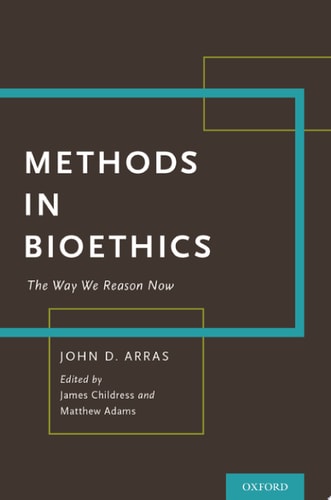
Methods in Bioethics: The Way We Reason Now
0
0
As an Amazon Associate and affiliate partner, Menrva Books earns from qualifying purchases. Learn more
Author Description
This book provides an overview and critical discussion of the main philosophical methods that have dominated the field of bioethics since its origins in the late 1960s and early 1970s. The first three chapters outline some influential theories that are important to understanding the methodological approaches that follow. Chapter 1 offers a survey of the theory of principlism as expounded by Tom Beauchamp and James Childress, Chapter 2 examines Bernard Gert's defense of common morality, and Chapter 3 discusses the so-called "new casuistry." The next three chapters trace a historical dialectic. Chapter 4 explores the shift that has increasingly occurred in bioethics away from the pursuit of objectivity or truth and towards narrative ethics, while Chapter 5 uncovers the "classical" roots of American pragmatism and explains their on-going relevance for contemporary bioethics. This paves the way for Chapter 6's examination of "freestanding" pragmatists such as Susan Wolf who, in contrast, see their approach as untethered to the classical canon of American pragmatism. With this background firmly established, the next two chapters handle some influential contemporary approaches. Chapter 7 considers the "internal morality" approach to medicine; chapter 8 discusses the method of reflective equilibrium. Chapter 9 summarizes and reflects on the results of the preceding eight chapters. Rather than staking out and defending a final position, the book aspires to uncover the advantages and disadvantages of the different methodological approaches. In the words of Kierkegaard, it aims to make life "harder" rather than "easier" for bioethics by uncovering some outstanding challenges.
Menrva's Summary
THE THESIS
This book investigates the primary philosophical methodologies that have shaped the field of bioethics since its inception in the late 1960s. John Arras, a scholar in the field, provides a critical examination of these frameworks to determine their utility and limitations. By analyzing the historical dialectic and contemporary applications of these methods, the author aims to expose the inherent complexities and unresolved challenges within bioethical reasoning.
THE SCOPE MAP
What You Will Find
- Analysis of principlism as defined by Beauchamp and Childress
- Examination of common morality and the new casuistry
- Historical overview of narrative ethics and American pragmatism
- Discussion of internal morality and reflective equilibrium
Scope Limits
- The text does not attempt to defend a single superior methodology
- It does not provide a comprehensive history of all medical ethics developments
THE AUTHORITY PERSPECTIVE
Experts recognize this work as a rigorous survey of the methodological landscape in bioethics. Readers frequently note the academic density of the prose, which is intended for students and practitioners seeking a deeper understanding of the field's philosophical foundations.
Page Count:
248
Publication Date:
2017-01-01
Publisher:
Oxford University Press
ISBN-10:
0190666005
ISBN-13:
9780190666002
Philosophy
Bioethics
Academic
Medical
Ethics
Allied Health
Medical Ethics
Community Tags
Similar Books