Liberty and Freedom
0
0
As an Amazon Associate and affiliate partner, Menrva Books earns from qualifying purchases. Learn more
Author Description
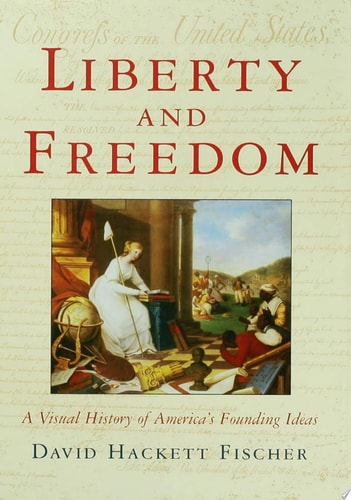
A distinguished history and author of Washington's Crossing analyzes the concepts of liberty and freedom through visions, images, and symbols throughout the folk history of those ideas, showing how they are popular beliefs deeply embedded in American culture rather than political abstractions. Liberty and freedom: Americans agree that these values are fundamental to our nation, but what do they mean? How have their meanings changed through time? In this new volume of cultural history, David Hackett Fischer shows how these varying ideas form an intertwined strand that runs through the core of American life. Fischer examines liberty and freedom not as philosophical or political abstractions, but as folkways and popular beliefs deeply embedded in American culture. Tocqueville called them "habits of the heart." From the earliest colonies, Americans have shared ideals of liberty and freedom, but with very different meanings. Like DNA these ideas have transformed and recombined in each generation. The book arose from Fischer's discovery that the words themselves had differing origins: the Latinate "liberty" implied separation and independence. The root meaning of "freedom" (akin to "friend") connoted attachment: the rights of belonging in a community of freepeople. The tension between the two senses has been a source of conflict and creativity throughout American history.Liberty & Freedom studies the folk history of those ideas through more than 400 visions, images, and symbols. It begins with the American Revolution, and explores the meaning of New England's Liberty Tree, Pennsylvania's Liberty Bells, Carolina's Liberty Crescent, and "Don't Tread on Me" rattlesnakes. In the new republic, the search for a common American symbol gave new meaning to Yankee Doodle, Uncle Sam, Miss Liberty, and many other icons. In the Civil War, Americans divided over liberty and freedom. Afterward, new universal visions were invented by people who had formerly been excluded from a free so
Menrva's Summary
THE THESIS
This work investigates how the concepts of liberty and freedom function as deeply embedded folkways within American culture rather than as static political abstractions. David Hackett Fischer, a distinguished historian, utilizes a vast array of cultural artifacts and historical symbols to trace the evolution of these ideals from the colonial era to the modern day. He argues that the distinct etymological roots of the two terms—liberty implying independence and freedom implying communal belonging—have created a persistent, productive tension that shapes the American national identity.
THE SCOPE MAP
What You Will Find
- An etymological analysis of the Latinate origins of liberty versus the Germanic roots of freedom.
- A comprehensive examination of over 400 historical visions, images, and symbols including the Liberty Tree and the Liberty Bell.
- A chronological study of American iconography ranging from the Revolutionary era to the Civil War and beyond.
- An exploration of how these concepts have been reinterpreted by marginalized groups to expand the definition of American citizenship.
THE AUTHORITY PERSPECTIVE
Historians and scholars frequently cite this work as a foundational text for understanding the cultural underpinnings of American political thought. Readers often note the impressive breadth of the visual evidence provided, which effectively bridges the gap between academic history and popular cultural expression.
Page Count:
864
Publication Date:
2004-01-01
Publisher:
Oxford University Press
ISBN-10:
0199774900
ISBN-13:
9780199774906
History
Sociology
American History
Cultural History
Community Tags
Similar Books