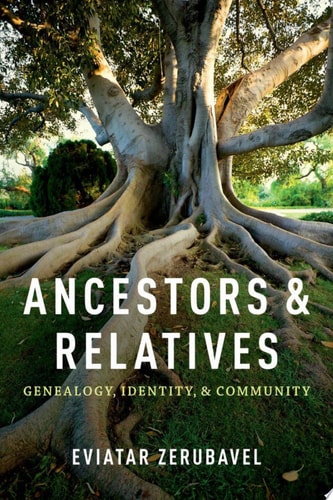
Ancestors and Relatives
0
0
As an Amazon Associate and affiliate partner, Menrva Books earns from qualifying purchases. Learn more
Author Description
Genealogy Has Long Been One Of Humanity's Greatest Obsessions. But With The Rise Of Genetics, And Increasing Media Attention To It Through Programs Like Who Do You Think You Are? And Faces Of America, We Are Now Told That Genetic Markers Can Definitively Tell Us Who We Are And Where We Came From. The Problem, Writes Eviatar Zerubavel, Is That Biology Does Not Provide Us With The Full Picture. After All, He Asks, Why Do We Consider Barack Obama Black Even Though His Mother Was White? Why Did The Nazis Believe That Unions Of Germans And Jews Would Produce Jews Rather Than Germans? In This Provocative Book, He Offers A Fresh Understanding Of Relatedness, Showing That Its Social Logic Sometimes Overrides The Biological Reality It Supposedly Reflects. In Fact, Rather Than Just Biological Facts, Social Traditions Of Remembering And Classifying Shape The Way We Trace Our Ancestors, Identify Our Relatives, And Delineate Families, Ethnic Groups, Nations, And Species. Furthermore, Genealogies Are More Than Mere Records Of History. Drawing On A Wide Range Of Evidence, Zerubavel Introduces Such Concepts As Braiding, Clipping, Pasting, Lumping, Splitting, Stretching, And Pruning To Shed Light On How We Manipulate Genealogies To Accommodate Personal And Collective Agendas Of Inclusion And Exclusion. Rather Than Simply Find Out Who Our Ancestors Were And Identify Our Relatives, We Actually Construct The Genealogical Narratives That Make Them Our Ancestors And Relatives. An Eye-opening Re-examination Of Our Very Notion Of Relatedness, Ancestors And Relatives Offers A New Way Of Understanding Family, Ethnicity, Nationhood, Race, And Humanity.
Menrva's Summary
THE THESIS
This book investigates the core question of how social traditions and cultural logic, rather than biological markers alone, dictate our understanding of kinship and ancestry. Eviatar Zerubavel, a professor of sociology, challenges the contemporary reliance on genetics to define identity. He argues that genealogical narratives are constructed through social processes that prioritize collective agendas of inclusion and exclusion over objective biological reality.
THE SCOPE MAP
What You Will Find
- Analysis of social mechanisms such as braiding, clipping, pasting, lumping, and splitting in genealogical construction.
- Examination of how ethnic, national, and racial identities are shaped by selective memory and classification.
- Case studies ranging from historical political movements to modern perceptions of race and family lineage.
- A theoretical framework for understanding how individuals and groups manipulate ancestral records to serve contemporary social needs.
THE AUTHORITY PERSPECTIVE
Scholars and readers frequently note the clarity of Zerubavel’s sociological framework, which provides a useful lens for deconstructing common assumptions about heritage. Experts highlight this as a foundational text for those interested in the intersection of identity politics, history, and social classification.
Page Count:
256
Publication Date:
2011-01-01
Publisher:
Oxford University Press, Incorporated
ISBN-10:
019977398X
ISBN-13:
9780199773985
History
Social Aspects
Political Aspects
Anthropology
Sociology
Social Science
Genealogy
Psychological aspects
Heredity
Families
Community Tags
Similar Books














