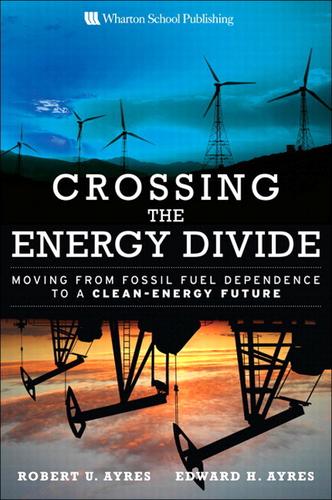
Crossing the Energy Divide
0
0
As an Amazon Associate and affiliate partner, Menrva Books earns from qualifying purchases. Learn more
Author Description
This book explains the environmentally and economically smart strategy for solving the global energy crisis -- starting now. If we continue our highly inefficient, dangerous energy usage, we're headed for both economic and environmental catastrophe. However, the hard truth is that alternative fuels can't fully replace fossil fuels for decades. What's more, new research indicates that energy inefficiencies are retarding economic growth even more than most experts ever realized. Crossing the Energy Divide is about solving all these problems at once. The authors, two leading experts in energy and environmental economics, show how massive improvements in energy efficiency can bridge the global economy until clean renewables can fully replace fossil fuels. Robert and Edward Ayres demonstrate how we can radically reform the way we manage our existing energy systems to double the amount of "energy service" we get from every drop of fossil fuel we use. These techniques require no scientific breakthroughs: Many companies and institutions are applying them right now, but tens of thousands more could. This book offers a strategic guide for using them to solve the energy crisis once and for all -- reducing carbon emissions, achieving true energy security, and reigniting economic growth for decades to come. - Publisher.
Menrva's Summary
THE THESIS
The global energy crisis demands an immediate, smart strategy that balances economic growth with environmental sustainability. The authors argue that while alternative fuels are not yet viable replacements for fossil fuels, massive improvements in energy efficiency can bridge the gap. They propose a comprehensive approach to reform energy management, aiming to double the energy service derived from each unit of fossil fuel used, thereby reducing carbon emissions, enhancing energy security, and stimulating economic growth.
THE SCOPE MAP
- Strategies for improving energy efficiency in existing systems.
- Analysis of the economic impacts of energy inefficiencies.
- The role of energy efficiency in achieving energy security.
- Methods for reducing carbon emissions through smarter energy usage.
- A guide to implementing efficiency techniques without scientific breakthroughs.
- The potential for reigniting economic growth through energy reform.
THE AUTHORITY PERSPECTIVE
The book is presented as a strategic guide for addressing the global energy crisis by focusing on efficiency improvements. It highlights the authors' expertise in energy and environmental economics, suggesting a data-driven approach to solving complex problems. The proposed solutions are framed as practical and immediately implementable, requiring no new scientific discoveries. The reception is likely to focus on the feasibility and economic viability of these efficiency-driven strategies.
Page Count:
0
Publication Date:
2010-01-01
ISBN-10:
0137015445
ISBN-13:
9780137015443
Science & Technology
Non-Fiction
Economics
Sustainability
Energy policy
Community Tags
Similar Books