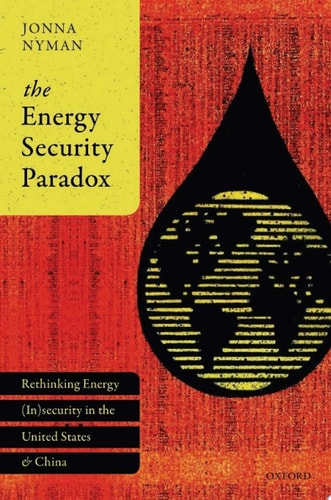
The Energy Security Paradox: Rethinking Energy (In)security in the United States and China
0
0
As an Amazon Associate and affiliate partner, Menrva Books earns from qualifying purchases. Learn more
Author Description
The decisions we make about energy shape our present and our future. From geopolitical tension to environmental degradation and an increasingly unstable climate, these choices infiltrate the very air we breathe. Energy security politics has direct impact on the continued survival of human life as we know it, and the earth cannot survive if we continue consuming fossil energy at current rates. The low carbon transition is simply not happening fast enough, and change is unlikely without a radical change in how we approach energy security. But thinking on energy security has failed to keep up with these changing realities. Energy security is primarily considered to be about the availability of reliable and affordable energy supplies - having enough energy - and it remains closely linked to national security. The Energy Security Paradox looks at contemporary energy security politics in the United States and China: the top two energy consumers and producers. Based on in-depth empirical analysis, it demonstrates that current energy security practices actually lead to a security paradox: they produce insecurity. To illustrate this, it develops the 'energy security paradox' as a framework for understanding the interconnected insecurities produced by current practices. However, it also goes beyond this, examining resistance to current practices to highlight that we not only can do energy security differently: this is already happening. In the process, the volume demonstrates that the value of security depends on the context. Based on this, The Energy Security Paradox proposes a radical reconsideration of how we approach and practice energy security.
Menrva's Summary
THE THESIS
This book investigates how current energy security practices in the United States and China paradoxically generate the very insecurities they aim to prevent. Jonna Nyman, a scholar in international relations and security studies, utilizes empirical analysis to argue that the traditional focus on reliable and affordable fossil fuel supplies is fundamentally incompatible with long-term environmental and human safety. She proposes a new conceptual framework, the 'energy security paradox,' to explain how state-level energy policies exacerbate global instability and climate degradation.
THE SCOPE MAP
What You Will Find
- Comparative analysis of energy policy in the United States and China
- The 'energy security paradox' theoretical framework
- Examination of grassroots and institutional resistance to current energy practices
- Critique of the traditional link between national security and fossil fuel reliance
Scope Limits
- Does not provide a technical manual for renewable energy implementation
- Does not cover energy policy in smaller developing nations or the Global South
THE AUTHORITY PERSPECTIVE
Experts in international relations and environmental policy recognize this work as a significant contribution to critical security studies. Readers frequently note the academic density of the prose, which is best suited for researchers and students of political science.
Page Count:
191
Publication Date:
2018-01-01
Publisher:
OUP Oxford
ISBN-10:
0192552406
ISBN-13:
9780192552402
Sustainability
Geopolitics
Energy policy
International relations
Community Tags
Similar Books