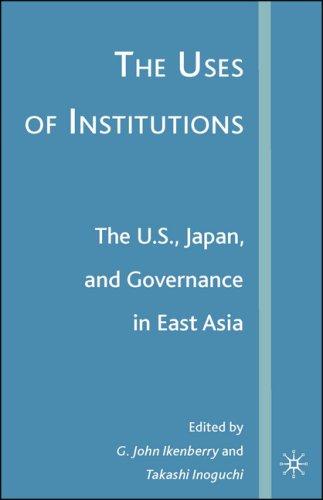
The Uses of Institutions
0
0
As an Amazon Associate and affiliate partner, Menrva Books earns from qualifying purchases. Learn more
Author Description
This book explores the ways that institutions play a role?or fail to?in Japanese and American approaches to regional governance in East Asia. It uses recent studies on the logic and dynamics of institutions to determine the logic of order within the East Asia region. The central focus is on bilateral and multilateral regional institutions, how Japan and the U.S. use these institutions, and what we can learn about the future direction of institutions of governance within the East Asia region.
Menrva's Summary
THE THESIS
This book investigates the efficacy and application of institutions in shaping regional governance within East Asia, particularly through the lenses of Japanese and American approaches. It leverages contemporary scholarship on institutional logic and dynamics to analyze the underlying order of the East Asia region. The core of the study examines bilateral and multilateral regional institutions, detailing their utilization by Japan and the U.S., and extrapolating lessons for the future trajectory of governance institutions in the area.
THE SCOPE MAP
- Analysis of institutional roles and failures in Japanese and American approaches to East Asian regional governance.
- Application of recent studies on the logic and dynamics of institutions to understand regional order.
- Focus on bilateral and multilateral regional institutions.
- Examination of how Japan and the U.S. utilize these institutions.
- Exploration of the future direction of governance institutions in the East Asia region.
THE AUTHORITY PERSPECTIVE
The book is positioned as a scholarly examination of international relations and governance, likely appealing to academics and policymakers interested in East Asian political dynamics. Its focus on institutional theory suggests a rigorous analytical approach, providing insights into the mechanisms that underpin regional cooperation and order. The comparative study of Japan and the U.S. offers a nuanced perspective on how major powers interact with and shape international institutions. The work aims to contribute to a deeper understanding of the evolving landscape of governance in a critical global region.
Page Count:
256
Publication Date:
2007-01-01
ISBN-10:
1403976023
ISBN-13:
9781403976024
Politics
Science
Non-Fiction
Governance
International relations
Comparative Politics
Community Tags
Similar Books