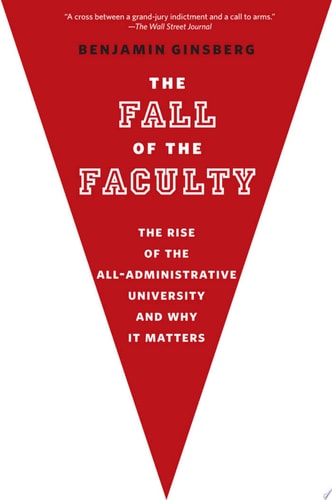
The Fall of the Faculty
0
0
As an Amazon Associate and affiliate partner, Menrva Books earns from qualifying purchases. Learn more
Author Description
Until Very Recently, American Universities Were Led Mainly By Their Faculties, Which Viewed Intellectual Production And Pedagogy As The Core Missions Of Higher Education. Today, As Benjamin Ginsberg Warns In This Eye-opening, Controversial Book, Deanlets--administrators And Staffers Often Without Serious Academic Backgrounds Or Experience--are Setting The Educational Agenda. The Fall Of The Faculty Examines The Fallout Of Rampant Administrative Blight That Now Plagues The Nation's Universities. In The Past Decade, Universities Have Added Layers Of Administrators And Staffers To Their Payrolls Every Year Even While Laying Off Full-time Faculty In Increasing Numbers--ostensibly Because Of Budget Cuts. In A Further Irony, Many Of The Newly Minted--and Non-academic--administrators Are Career Managers Who Downplay The Importance Of Teaching And Research, As Evidenced By Their Tireless Advocacy For A Banal Life Skills Curriculum. Consequently, Students Are Denied A More Enriching Educational Experience--one Defined By Intellectual Rigor. Ginsberg Also Reveals How The Legitimate Grievances Of Minority Groups And Liberal Activists, Which Were Traditionally Championed By Faculty Members, Have, In The Hands Of Administrators, Been Reduced To Chess Pieces In A Game Of Power Politics. By Embracing Initiatives Such As Affirmative Action, The Administration Gained Favor With These Groups And Legitimized A Thinly Cloaked Gambit To Bolster Their Power Over The Faculty. As Troubling As This Trend Has Become, There Are Ways To Reverse It. The Fall Of The Faculty Outlines How We Can Revamp The System So That Real Educators Can Regain Their Voice In Curriculum Policy.
Menrva's Summary
THE THESIS
The central question investigated is how the proliferation of non-academic administrators has eroded the traditional faculty-led governance of American universities. Benjamin Ginsberg, a political scientist, utilizes institutional data and historical analysis to argue that the rise of the 'deanlet' class has shifted university priorities away from research and pedagogy. He contends that this administrative expansion creates a bureaucratic power structure that marginalizes educators and diminishes the intellectual rigor of the undergraduate experience.
THE SCOPE MAP
What You Will Find
- Analysis of administrative growth trends in American higher education over the past decade.
- Examination of the shift from faculty-led governance to manager-led institutional agendas.
- Critique of the 'life skills' curriculum as a substitute for traditional academic inquiry.
- Discussion of how administrative power dynamics co-opt social justice initiatives for institutional control.
THE AUTHORITY PERSPECTIVE
Critics and academics frequently cite this work as a provocative critique of modern university management structures. Scholars often note the author's sharp focus on the tension between bureaucratic expansion and the preservation of academic freedom.
Page Count:
272
Publication Date:
2011-01-01
Publisher:
Oxford University Press, Incorporated
ISBN-10:
0199782687
ISBN-13:
9780199782680
Non-Fiction
Politics
Sociology
Education higher
Universities And Colleges
Higher Education
Education
Community Tags
Other Editions(4)
Similar Books










Reader Comments
Share Your Thoughts
No comments yet. Be the first to share your thoughts!