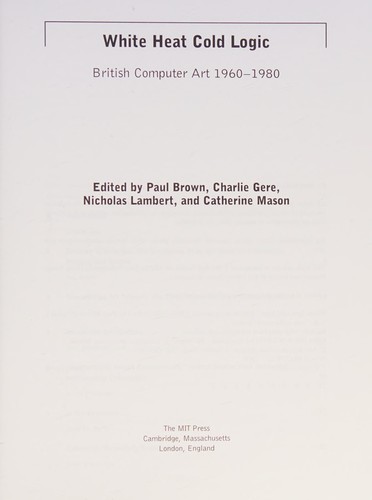
White Heat, Cold Logic
0
0
As an Amazon Associate and affiliate partner, Menrva Books earns from qualifying purchases. Learn more
Author Description
"In this heroic period of computer art, artists were required to build their own machines, collaborate closely with computer scientists, and learn difficult computer languages. White Heat Cold Logic's chapters, many written by computer art pioneers themselves, describe the influence of cybernetics, with its emphasis on process and interactivity; the connections to the constructivist movement; and the importance of work done in such different venues as commercial animation, fine art schools, and polytechnics."--Jacket.
Menrva's Summary
THE THESIS
The book chronicles the foundational era of computer art, a period demanding immense technical and collaborative effort from its pioneers. It details the interdisciplinary nature of early computer art, where artists had to construct their own hardware, partner with computer scientists, and master complex programming languages. The text explores the impact of cybernetics, focusing on concepts of process and interactivity, and draws parallels to the constructivist movement. Furthermore, it highlights significant contributions made across diverse settings, including commercial animation studios and academic institutions.
THE SCOPE MAP
- The influence of cybernetics on early computer art, emphasizing process and interactivity.
- Connections between computer art and the constructivist movement.
- The role of pioneers in developing the field, often through self-taught machine building and programming.
- Contributions from various venues such as commercial animation, fine art schools, and polytechnics.
- An exploration of the heroic period of computer art creation.
THE AUTHORITY PERSPECTIVE
This work is recognized for its detailed examination of the early computer art movement, particularly its focus on the technical and collaborative challenges faced by artists. It is valued for including firsthand accounts from pioneers, offering direct insight into the period's innovations and influences. The book's scope covers key theoretical underpinnings like cybernetics and constructivism, alongside practical applications in diverse artistic and educational environments. It serves as a crucial historical document for understanding the genesis of digital art.
Page Count:
450
Publication Date:
2008-01-01
ISBN-10:
0262026538
ISBN-13:
9780262026536
Art
Non-Fiction
History
Constructivism
Cybernetics
Art History
Computer art
Community Tags
Similar Books