Terrible Revolution
0
0
As an Amazon Associate and affiliate partner, Menrva Books earns from qualifying purchases. Learn more
Author Description
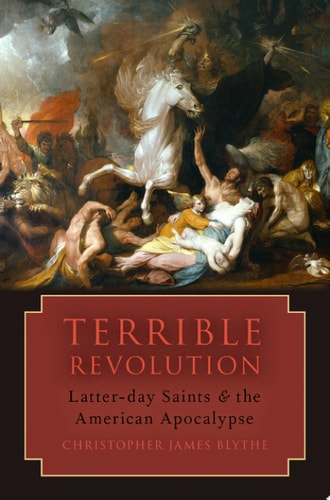
The Relationship Between Mormons And The United States Was Marked By Anxiety And Hostility. Nineteenth-century Latter-day Saints Looked Forward To Apocalyptic Events That Would Unseat Corrupt Governments Across The Globe But Would Particularly Decimate The Tyrannical Government Of The United States. Mormons Turned To Prophecies Of Divine Deliverance By Way Of Plagues, Natural Disasters, Foreign Invasions, American Indian Raids, Slave Uprisings, Or Civil War Unleashed On American Cities And American People. For The Saints, These Violent Images Promised An End To Their Oppression. It Also Promised A National Rebirth As Part Of The Millennial Kingdom Of God That Would Vouchsafe The Protections Of The United States Constitution. Blythe Examines Apocalypticism Across The History Of The Church Of Jesus Christ Of Latter-day Saints Particularly As It Would Take Shape In Localized And Personalized Forms In The Writings And Visions Of Ordinary Latter-day Saints Outside Of The Church's Leadership. By Following The Official Response Of Church Leaders To Lay Prophecy, Blythe Shows How The Hierarchy, Committed To A Form Of Separatist Nationalism Of Their Own, Encouraged Apocalypticism During The Nineteenth Century. Yet, After Utah Obtained Statehood, As The Church Sought To Accommodate To National Norms For Religious Denominations, Leaders Sought To Lessen The Tensions Between Themselves And American Political And Cultural Powers. As A Result, Visions Of A Violent End To The Nation Became A Liability And Leaders Began To Disavow And Regulate These Apocalyptic Narratives Particularly As They Showed Up Among The Laity-- Provided By Publisher.
Menrva's Summary
THE THESIS
This book investigates the evolution of apocalyptic thought within the Church of Jesus Christ of Latter-day Saints and its shifting relationship with the United States government. Christopher James Blythe, a scholar of Mormon history, utilizes a vast array of primary sources—including personal journals, visions, and letters from lay members—to construct his argument. He posits that while early church leadership encouraged apocalyptic narratives as a form of separatist nationalism, the eventual pursuit of statehood and national integration necessitated a systematic disavowal of these violent prophecies among the laity.
THE SCOPE MAP
What You Will Find
- Analysis of nineteenth-century Latter-day Saint apocalypticism and its focus on the destruction of the U.S. government
- Examination of the tension between lay prophecy and institutional church hierarchy
- Documentation of the transition from radical separatism to accommodation with American political norms
Scope Limits
- The study focuses primarily on the nineteenth and early twentieth centuries, with limited analysis of contemporary apocalyptic movements
- The research prioritizes the American context, providing less detail on international manifestations of these specific theological shifts
THE AUTHORITY PERSPECTIVE
Scholars in the field of American religious history identify this work as a significant contribution to understanding the intersection of theology and political identity. Readers frequently note the academic rigor of the research and the author's ability to synthesize obscure primary source material into a coherent historical narrative.
Page Count:
0
Publication Date:
2023-01-01
Publisher:
New York, NY : Oxford University Press,
ISBN-10:
0190080310
ISBN-13:
9780190080310
History
Religion
Christianity And Culture
Jesus Christ
Apocalypticism
Sociology of Religion
Mormon Studies
American History
Community Tags
Similar Books