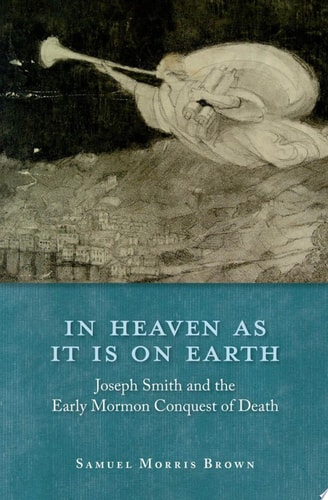
In Heaven As It Is On Earth
0
0
As an Amazon Associate and affiliate partner, Menrva Books earns from qualifying purchases. Learn more
Author Description
A Compelling New Interpretation Of Early Mormonism, Samuel Brown's In Heaven As It Is On Earth Views This Religion Through The Lens Of Founder Joseph Smith's Profound Preoccupation With The Specter Of Death. Revisiting Historical Documents And Scripture From This Novel Perspective, Brown Offers New Insight Into The Origin And Meaning Of Some Of Mormonism's Earliest Beliefs And Practices. The World Of Early Mormonism Was Besieged By Death--infant Mortality, Violence, And Disease Were Rampant. A Prolonged Battle With Typhoid Fever, Punctuated By Painful Surgeries Including A Threatened Leg Amputation, And The Sudden Loss Of His Beloved Brother Alvin Cast A Long Shadow Over Smith's Own Life. Smith Embraced And Was Deeply Influenced By The Culture Of Holy Dying--with Its Emphasis On Deathbed Salvation, Melodramatic Bereavement, And Belief In The Providential Nature Of Untimely Death--that Sought To Cope With The Widespread Mortality Of The Period. Seen In This Light, Smith's Treasure Quest, Search For Native Origins, Distinctive Approach To Scripture, And Belief In A Post-mortal Community All Acquire New Meaning, As Do Early Mormonism's Masonic-sounding Temple Rites And Novel Family System. Taken Together, The Varied Themes Of Early Mormonism Can Be Interpreted As A Campaign To Extinguish Death Forever. By Focusing On Mormon Conceptions Of Death, Brown Recasts The Story Of First-generation Mormonism, Showing A Religious Movement And Its Founder At Once Vibrant And Fragile, Intrepid And Unsettled, Human And Otherworldly. A Lively Narrative History, In Heaven As It Is On Earth Illuminates Not Only The Foundational Beliefs Of Early Mormonism But Also The Larger Issues Of Family And Death In American Religious History.
Menrva's Summary
THE THESIS
This book investigates whether the foundational beliefs and practices of early Mormonism were primarily a theological response to the pervasive reality of death in nineteenth-century America. Samuel Morris Brown, a scholar of religious history, utilizes a synthesis of historical documents, personal correspondence, and early Mormon scripture to argue that Joseph Smith’s religious framework was shaped by his personal encounters with mortality. By examining the culture of 'holy dying' and the specific traumas Smith endured, Brown posits that early Mormonism functioned as a systematic effort to conquer the finality of death through family structures and temple rituals.
THE SCOPE MAP
What You Will Find
- Historical analysis of nineteenth-century American attitudes toward mortality and bereavement.
- Examination of Joseph Smith’s personal medical history, including his battle with typhoid fever and the loss of his brother.
- Interpretive frameworks connecting early Mormon temple rites and family systems to the concept of eternal kinship.
- Contextualization of Smith’s treasure seeking and scriptural development within the broader landscape of American religious history.
THE AUTHORITY PERSPECTIVE
Scholars and historians of American religion frequently cite this work for its innovative approach to understanding the psychological and cultural motivations behind early Mormon theology. Readers often note the academic rigor of the research while appreciating the clarity with which Brown connects personal trauma to institutional religious development.
Page Count:
408
Publication Date:
2011-01-01
Publisher:
Oxford University Press
ISBN-10:
0199793689
ISBN-13:
9780199793686
Biography
Religion
History
Mormonism
American History
Community Tags
Similar Books














