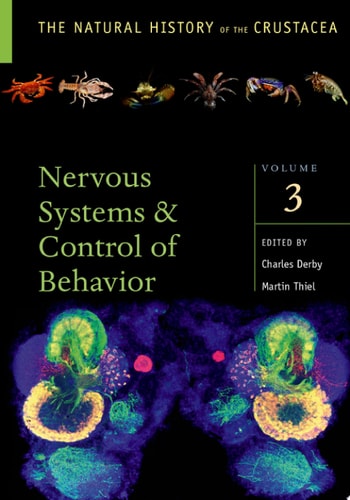
Nervous Systems and Control of Behavior: Volume III
0
0
As an Amazon Associate and affiliate partner, Menrva Books earns from qualifying purchases. Learn more
Author Description
Crustacean Nervous Systems and their Control of Behavior is the third volume of the series The Natural History of the Crustacea. This volume is on the functional organization of crustacean nervous systems, and how those nervous systems produce behavior. It complements other volumes on related topics of feeding biology, reproductive biology, endocrine systems, and behavioral ecology. There is a rich history of the study of the neurobiology of crustaceans, going back over 150 years. This has included studies on how their nervous systems allow them to perform behaviors that are adapted to their particular environments, as well as studying them as model organisms to understand basic biomedical principles about neural function, such as sensory transduction and processing, synaptic transmission and integration, neuromodulation, and learning and memory.The volume has three sections that build progressively on each other. The first section is on the basic organizational features of the crustacean nervous system and the principles upon which it is built. The second section is on sensory ecology - the organization of each sensory system and how it is used in intra- and interspecific interactions, within an ecological context. The third section uses case studies of how crustacean nervous systems are organized to perform complex behaviors and interactions, such as walking, escape, social interactions, and memory and learning. Taken together, the 20 chapters synthesize our modern understanding of the neural control of behavior in crustaceans, based on the most recent technologies in physiological recording, molecular biology, and computational science. This volume will be useful to students and researchers as a concise summary of current knowledge of crustacean neuroscience.
Menrva's Summary
THE THESIS
This volume investigates the functional organization of crustacean nervous systems and the mechanisms by which these neural structures generate specific behaviors. Editors Charles Derby and Martin Thiel compile contributions from leading experts to synthesize 150 years of neurobiological research. The text integrates physiological, molecular, and computational data to explain how neural architecture facilitates environmental adaptation and serves as a model for broader biomedical principles of neural function.
THE SCOPE MAP
What You Will Find
- Organizational principles of the crustacean nervous system including synaptic transmission and integration.
- Analysis of sensory ecology and the role of sensory systems in interspecific and intraspecific interactions.
- Case studies detailing the neural control of complex behaviors such as locomotion, escape responses, and social interaction.
- Synthesis of modern research methodologies including molecular biology, computational science, and advanced physiological recording.
THE AUTHORITY PERSPECTIVE
Experts identify this volume as a comprehensive reference for students and researchers specializing in comparative neurobiology. Readers frequently note the technical density of the prose, which serves as a foundational resource for understanding the intersection of crustacean behavior and neural architecture.
Page Count:
592
Publication Date:
2014-01-01
Publisher:
Oxford University Press
ISBN-10:
0199791732
ISBN-13:
9780199791736
Science
Reference
Marine Biology
Neuroscience
Zoology
Biology
Community Tags
Similar Books