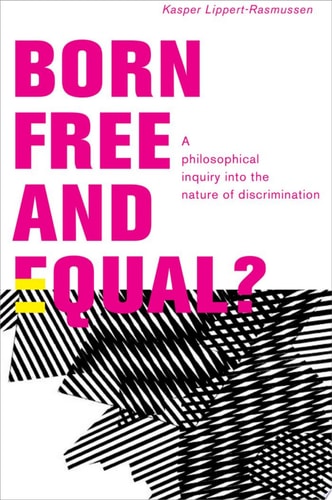
Born Free and Equal?: A Philosophical Inquiry into the Nature of Discrimination
0
0
As an Amazon Associate and affiliate partner, Menrva Books earns from qualifying purchases. Learn more
Author Description
What is discrimination? There are certain instances of differential treatment that almost anyone would describe as discriminatory; yet upon deeper examination, this near-unanimity gives way to disagreement and difference. For instance, is it discrimination when hospitals hire non-smokers only? Not only do people differ on which cases of differential treatment they see as discriminatory, they also disagree about when discrimination is morally wrong; what makes it morally wrong; and, indeed, about whether all forms of discrimination are morally wrong! Finally, many disagree over what should be done about wrongful discrimination-especially about what the state could permissibly do to eliminate wrongful discrimination, e.g. in people's love lives. This book addresses these issues. It argues that there are different concepts of discrimination and that different purposes pertaining to different contexts determine which one is the most useful. It gives special attention to a concept of discrimination that ties discrimination to differential treatment of people on the basis of their membership in socially salient groups. Second, it argues that when discrimination is wrong, it is so first and foremost because of its harmful effects. Third, it takes issue with some of the standard devices used to counteract discrimination and submits that combating discrimination requires more than state actions. Finally, it argues that states may sometimes permissibly discriminate.
Menrva's Summary
THE THESIS
This book investigates the conceptual and moral foundations of discrimination to determine what constitutes wrongful treatment and how society should respond. Kasper Lippert-Rasmussen, a professor of political theory, utilizes analytical philosophy to deconstruct the multifaceted nature of differential treatment. He argues that discrimination is not a monolithic concept but varies by context, proposing that its moral wrongness is primarily rooted in its harmful consequences rather than inherent intent. The text systematically evaluates the role of the state in mitigating these harms while acknowledging the complexities of social group dynamics.
THE SCOPE MAP
What You Will Find
- A conceptual framework distinguishing between various definitions of discrimination based on social group membership.
- An analysis of the moral status of differential treatment in both public and private spheres.
- A critical evaluation of standard state-led policy interventions and their efficacy.
- Arguments regarding the conditions under which state-sanctioned discrimination may be considered permissible.
THE AUTHORITY PERSPECTIVE
Scholars and students of political philosophy frequently cite this work as a rigorous, high-level examination of the ethics of discrimination. Readers often note the academic density of the prose, which is designed for those seeking a structured, analytical approach to complex social justice questions.
Page Count:
317
Publication Date:
2013-01-01
Publisher:
Oxford University Press
ISBN-10:
0199796165
ISBN-13:
9780199796168
Philosophy
Ethics
Professional Career & Trade
Discrimination
Sociology
Social Issues
Community Tags
Similar Books