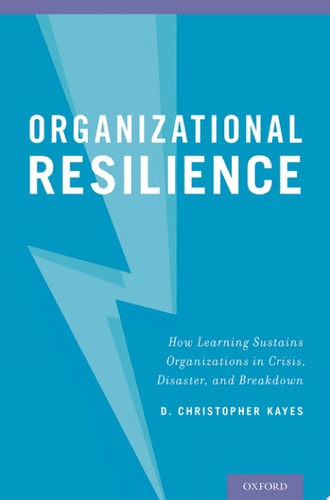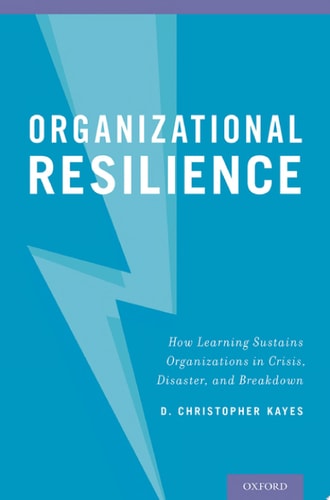
Organizational Resilience: How Learning Sustains Organizations in Crisis, Disaster, and Breakdown
0
0
As an Amazon Associate and affiliate partner, Menrva Books earns from qualifying purchases. Learn more
Author Description
In The Age Of Knowledge, Organizations Survive And Thrive Only When They Learn. All Too Often, When Organizations Are Confronted With Novel Or Changing Situations, The Process Of Learning Breaks Down And The Result Is Catastrophic. In Organizational Resilience: How Learning Sustains Organizations In Crisis, Disaster, And Breakdown, D. Christopher Kayes Explains Why All Organizational Leaders Should Be Concerned About Learning And The Dire Consequences That May Ensue If They Are Not. Kayes Draws On The Foundational Ideas Of Philosopher John Dewey, Then Connects This Philosophy To Contemporary Studies On Learning, Management, And Organizations. Through A Wide Range Of Examples From The Realms Of Government, Finance, Engineering, Healthcare, And Commercial Air Travel, He Describes How Learning Can Help Organizations Weather Crises And Outlines Specific Ways That Leaders Can Learn From Their Experience. The First Comprehensive Review Of How Learning Sustains Organizations In Challenging Times, Organizational Resilience Is Essential Reading For Crisis Managers, Disaster-recovery Team Leaders, Continuity-of-operations Planning Professionals, Emergency-management Professionals, And Leaders At All Levels Who Want Their Organizations To Thrive.
Menrva's Summary
THE THESIS
This book investigates the critical relationship between organizational learning processes and the ability of institutions to survive and thrive during periods of crisis or unexpected change. D. Christopher Kayes, an expert in organizational behavior, synthesizes the philosophical foundations of John Dewey with modern management research to argue that learning is the primary mechanism for resilience. He examines why traditional learning structures often collapse under pressure and provides a framework for leaders to foster adaptive capabilities within their teams.
THE SCOPE MAP
What You Will Find
- Analysis of organizational failure during novel or high-stakes situations.
- Application of John Dewey’s philosophical theories to contemporary management practices.
- Case studies drawn from diverse sectors including finance, healthcare, engineering, and aviation.
- Practical strategies for leaders to facilitate institutional learning during disaster recovery and crisis management.
THE AUTHORITY PERSPECTIVE
Experts and practitioners in the field of crisis management identify this work as a foundational text for understanding the intersection of philosophy and operational continuity. Readers frequently note the academic density of the prose, which provides a rigorous intellectual framework for those tasked with long-term organizational planning.
Page Count:
344
Publication Date:
2015-01-01
Publisher:
Oxford University Press
ISBN-10:
0199791090
ISBN-13:
9780199791095
Business
Management
Leadership