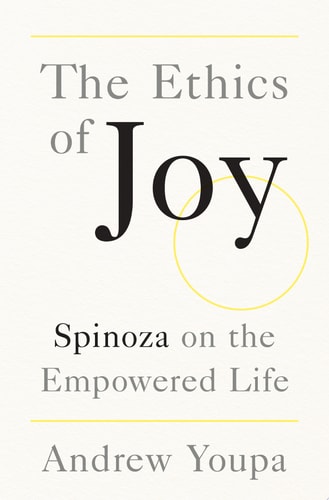
The Ethics of Joy: Spinoza on the Empowered Life
0
0
As an Amazon Associate and affiliate partner, Menrva Books earns from qualifying purchases. Learn more
Author Description
Philosopher Andrew Youpa offers a novel reading of Spinoza's moral philosophy. Unlike approaches to moral philosophy that center on praiseworthiness and blameworthiness, Youpa argues that Spinoza's moral philosophy is about how to live lovingly and joyously, not hatefully or sorrowfully. It is, fundamentally, an ethics of joy. Central to this reading is a defense of the view that there is a way of life that is best for human beings, and that what makes it best is its alignment with human nature. This is not, significantly, an ethics of accountability, or what a person does or does not deserve. Morality's role is not to assign credit or blame to individuals in an economy of good and evil; rather, it is to heal the sick and empower the vulnerable. It is an ethics centered on what, with respect to mental and physical well-being, requires our attention. Spinoza's ethics adheres to a medical model of morality, enacting and embodying a system of care to ourselves, care to others, and care to things in the world around us. From this approach, Youpa defends a comprehensive reading of Spinoza's moral philosophy, including its realism, pluralism, and the importance of friendship and education, which are the greatest sources of empowerment and joy. Empowering ourselves and others begins with love: the type of love that Spinoza refers to as the virtue of modestia, or humble devotion to others with their true well-being in mind. Youpa's examination starts with an original interpretaion of Spinoza's theory of emotions, and then turns to the metaphysical foundation of his moral philosophy and its normative and practical implications.
Menrva's Summary
THE THESIS
This book investigates how Baruch Spinoza’s moral philosophy functions as a medical model of ethics focused on empowerment and joy rather than traditional concepts of praise and blame. Andrew Youpa, a scholar of early modern philosophy, argues that Spinoza’s framework prioritizes the cultivation of well-being and the healing of the human condition. By shifting the focus away from an economy of accountability, the author presents a system of care that emphasizes alignment with human nature and the practical application of virtue.
THE SCOPE MAP
What You Will Find
- An analysis of Spinoza’s theory of emotions as the foundation for moral action.
- A detailed examination of the metaphysical underpinnings of Spinoza’s normative claims.
- Discussions on the roles of friendship, education, and the virtue of modestia in achieving an empowered life.
Scope Limits
- The text does not focus on traditional deontological or consequentialist frameworks of moral accountability.
- It does not provide a general history of 17th-century philosophy beyond what is necessary to support the specific reading of Spinoza.
THE AUTHORITY PERSPECTIVE
Scholars and students of Spinoza frequently note that this text provides a clear, accessible departure from more traditional, legalistic interpretations of the Ethics. Experts highlight this work as a significant contribution to the study of Spinoza’s moral psychology and his practical approach to human flourishing.
Page Count:
207
Publication Date:
2019-01-01
Publisher:
Oxford University Press
ISBN-10:
0190086041
ISBN-13:
9780190086046
Philosophy
Non-Fiction
Ethics
Moral Philosophy
Spinoza
Community Tags
Similar Books