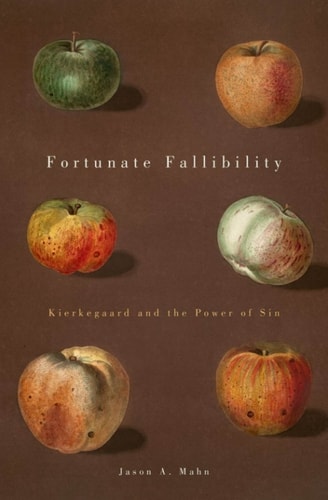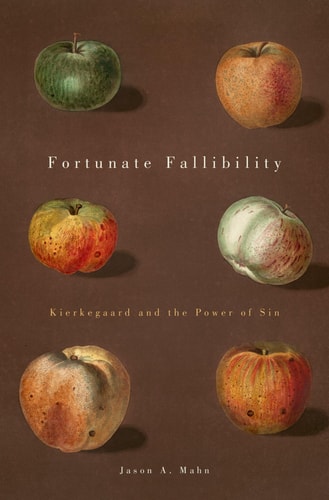
Fortunate Fallibility: Kierkegaard and the Power of Sin
0
0
As an Amazon Associate and affiliate partner, Menrva Books earns from qualifying purchases. Learn more
Author Description
For more than 1,500 years, the claim that Adam's Fall might be considered 'fortunate' has been Christianity's most controversial and difficult idea. While keepers of the Easter vigil in the fifth century (and later John Milton) praised sin only as a backhanded witness to the ineffability of redemption, modern speculative theodicy came to understand all evil as comprehensible, historically productive, and therefore fortunate, while the romantic poets credited transgression with bolstering individual creativity and spirit.Jason Mahn's compelling study examines Kierkegaard's ''para/orthodixical'' language of human fallibility and Christian sin. Mahn breaks down and reconstructs the concept of the fortunate Fall in Western thought, in context of Kierkegaard's later writings, examining Kierkegaard's blunt critique of Idealism's justification of evil, as well as his playful deconstruction of romantic celebrations of sin. Mahn also argues, though, that Kierkegaard resists the moralization of evil, preferring to consider temptation and sin as determinative dimensions of religious existence. In relation to the assumed ''innocence'' of Christendom's cultured Christians, the self-conscious sinner might be the better religious witness.Although Mahn shows how Kierkegaard finally replaces actual sin with human fragility, temptation, and the possibility of spiritual offense as that which ''happily'' shapes religious faith, he cogently argues that Kierkegaard's understanding of ''fortunate fallibility'' is at least as rhetorically compelling and theologically operative as talk of a fortunate Fall. Mahn's insights into Kierkegaard's playful maneuvers encourage Christian theologians to speak of sin more particularly and peculiarly than in the typical discourses of church and culture.
Menrva's Summary
THE THESIS
How does Søren Kierkegaard’s unique theological framework redefine the traditional Christian concept of the 'fortunate Fall' into a more nuanced understanding of human fallibility? Jason A. Mahn, a scholar of religious studies, investigates the tension between historical theodicy and Kierkegaard’s specific critique of both Idealist justifications of evil and Romantic glorifications of transgression. By analyzing Kierkegaard’s later writings, Mahn argues that the philosopher shifts the focus from the historical event of the Fall to the existential reality of temptation, fragility, and the possibility of spiritual offense as the true catalysts for religious faith.
THE SCOPE MAP
What You Will Find
- A critical reconstruction of the 'fortunate Fall' doctrine within Western theological history.
- An analysis of Kierkegaard’s 'para/orthodixical' linguistic style and its function in religious discourse.
- A comparative study of Kierkegaard’s critique of Idealist theodicy and Romantic views on sin.
- A theological argument for viewing human fragility and temptation as essential components of authentic religious existence.
THE AUTHORITY PERSPECTIVE
Scholars and theologians identify this work as a significant contribution to Kierkegaardian studies, particularly for its ability to bridge the gap between abstract philosophy and practical religious experience. Readers frequently note the academic density of the prose, which is best suited for those already familiar with the history of Christian thought and existentialist literature.
Page Count:
288
Publication Date:
2011-07-06
Publisher:
Oxford University Press
ISBN-10:
0199790663
ISBN-13:
9780199790661
Philosophy
Religion
Fall of man
Fallibility
Sin
Theology
Existentialism
Christianity