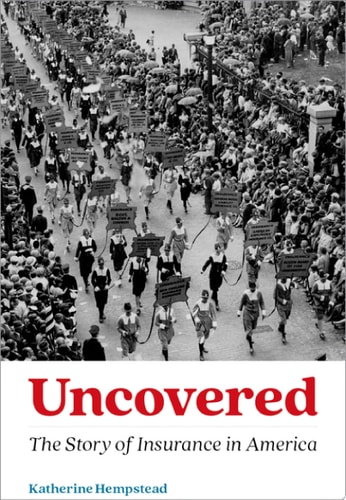
Uncovered: The Story of Insurance in America
0
0
As an Amazon Associate and affiliate partner, Menrva Books earns from qualifying purchases. Learn more
Author Description
Historically, the insurance industry in America has been fragmented. As a result, there have been debates and conflicts over the proper roles of federal and state governments, business, and the responsibilities of individuals. Who should cover the risks of loss? And to what extent should risk be shared and by whom?In Uncovered, Katherine Hempstead answers these questions by exploring the history of the insurance business and its regulation in the United States from the 1870s through the twentieth century. Specifically, she focuses on the friction between the public demand for insurance and the private imperatives of insurers. Tracing the history of the industry from the early days of life, fire, and casualty insurance to the development of state regulation in the late nineteenth century, Hempstead examines the role that insurers initially played in the largely voluntary social safety net and how this changed over time. After the Great Depression, the federal government assumed a greater role in the provision of insurance, while insurers enthusiastically pursued the growing business of employee benefits. As the twentieth century progressed, insurers and government have become interdependent, with insurers participating in publicly funded markets. As Hempstead shows, periodic crises in life, fire, health, auto, and liability insurance highlighted gaps between the coverage that insurers were willing to provide and what the public demanded.Highlighting how the major part states play in insurance regulation has made it harder to solve important problems, Uncovered fundamentally changes our understanding of the crucial role that insurance has always played in American politics.
Menrva's Summary
THE THESIS
How has the tension between private insurance imperatives and public demand shaped the regulatory landscape and social safety net in the United States? Katherine Hempstead, an expert in health policy and insurance history, utilizes a historical analysis of the American insurance industry to argue that the sector is defined by a persistent friction between corporate objectives and public expectations. By examining the evolution of life, fire, and casualty insurance, she demonstrates how the industry transitioned from a voluntary safety net to a complex, interdependent system involving significant federal and state oversight. The work posits that the fragmented nature of state-based regulation has historically hindered the resolution of systemic coverage gaps.
THE SCOPE MAP
What You Will Find
- Historical analysis of insurance regulation from the 1870s through the twentieth century.
- Examination of the shift from private voluntary coverage to government-interdependent markets.
- Case studies covering life, fire, health, auto, and liability insurance sectors.
Scope Limits
- The text does not provide a comprehensive guide to modern insurance policy or personal financial planning.
- The analysis focuses primarily on the American regulatory environment and does not compare it extensively with international insurance models.
THE AUTHORITY PERSPECTIVE
Experts recognize this work as a significant contribution to the political history of American finance and social policy. Readers frequently note the academic density of the prose, which provides a rigorous examination of how regulatory fragmentation impacts public access to coverage.
Page Count:
392
Publication Date:
2024-07-22
Publisher:
Oxford University Press
ISBN-10:
019009415X
ISBN-13:
9780190094157
History
Economics
Business
Insurance
Economic History
American History
Community Tags
Similar Books