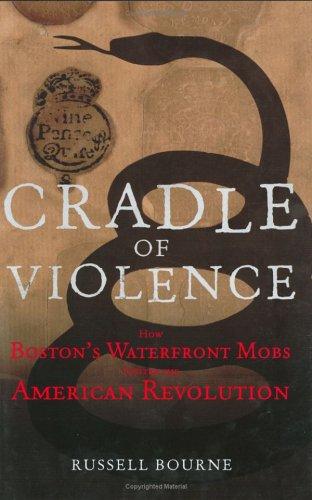
Cradle of Violence
0
0
As an Amazon Associate and affiliate partner, Menrva Books earns from qualifying purchases. Learn more
Author Description
Before John Adams and John Hancock, before the Sons of Liberty and the Committees of Correspondence, before Paul Revere's midnight ride, there were the rebellious maritime poor of Boston. Although these fishermen and merchant seamen had sweated and died to produce the vast wealth of America's preeminent port, they were cut off from its benefits. Impressed by the Royal Navy and slaughtered in Great Britain's imperial wars, they were the first to feel the pain and privation of the Stamp Act, the Townsend Acts, and other measures imposed by Parliament and King George III. And they were the first to take violent action against them. Cradle of Violence tells the story of these sailors and their families and the rest of the oppressed maritime populace: the exploited apprentices and runaway slaves, the career smugglers and sometime pirates, the laid-off dockworkers and seasonal ropewalk spinners. Casually dismissed by political leaders, but with a salty heritage of crewing and fighting together against all challengers, they were the ones with the down and dirty strength to gather in the streets of Boston and resist the authority of the British Empire. Russell Bourne demonstrates that galvanizing events such as the destructive Stamp Act riots, the Boston Massacre, and the Boston Tea Party could not have happened anywhere else in America. He shows how independent-minded merchants and ambitious craftsmen like Samuel Adams and Paul Revere made common cause with waterfront workers like cordwainer Ebenezer Mackintosh and Captain Henry Smith. In a communal rage, they started a sea swell of opposition to Great Britain that ultimately engulfed the land, resulting in the "shot heard 'round the world" of 1775--Jacket.
Menrva's Summary
THE THESIS
The maritime poor of Boston were the first to feel the pain and privation of British imperial measures, and they were the first to take violent action against them. Before the well-known figures of the American Revolution, fishermen, merchant seamen, apprentices, smugglers, and dockworkers formed a rebellious populace. Exploited and dismissed by political leaders, this group possessed a heritage of collective action and a strength that allowed them to resist the authority of the British Empire in the streets of Boston. Their actions, fueled by communal rage, initiated a wave of opposition that ultimately led to the conflict of 1775.
THE SCOPE MAP
- The history of Boston's rebellious maritime poor, including fishermen, merchant seamen, apprentices, smugglers, and dockworkers.
- An examination of the impact of the Stamp Act, Townsend Acts, and other parliamentary measures on the working class.
- The role of these groups in galvanizing events such as the Stamp Act riots, the Boston Massacre, and the Boston Tea Party.
- The common cause made between independent merchants and craftsmen (like Samuel Adams and Paul Revere) and waterfront workers (like Ebenezer Mackintosh and Captain Henry Smith).
- The origins of the opposition to Great Britain that culminated in the American Revolutionary War.
THE AUTHORITY PERSPECTIVE
Russell Bourne's "Cradle of Violence" is presented as a historical account that re-examines the origins of the American Revolution by focusing on the often-overlooked maritime poor of Boston. The book argues that these exploited groups were not merely passive recipients of British policy but were the primary instigators of violent resistance. By highlighting their collective action and their role in key events like the Boston Tea Party, Bourne suggests that the revolution could not have happened without their foundational opposition. The work aims to demonstrate how these waterfront workers, alongside emerging political figures, forged a powerful movement that ultimately engulfed the colonies.
Page Count:
272
Publication Date:
2006-01-01
ISBN-10:
0471675512
History
Politics
Non-Fiction
Social History
American History
Maritime history
Community Tags
Similar Books














