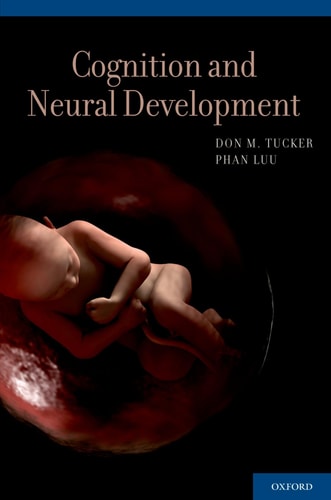
Cognition and Neural Development
0
0
As an Amazon Associate and affiliate partner, Menrva Books earns from qualifying purchases. Learn more
Author Description
Scientific research shows how experience shapes the organization of the human brain through mechanisms of neural plasticity, which capture the information of the world within the connections among neurons. To understand this plasticity, it is important to look to the developmental mechanisms through which the brain grows from a single cell in embryogenesis to achieve the complex architecture of the human brain. The process of neural morphogenesis involves exuberant formation of neuronal connections, and then subtractive elimination of unused connections. This process is continued after birth, providing the neural plasticity of learning that allows cognitive development in infancy and childhood. Recognizing this continuity suggests an interesting insight: Cognition is a reflection of neural development throughout the life span.With this insight, the authors of Cognition and Neural Development examine the embryonic development of the brain to appreciate the dimensions of developmental momentum that shape the neural and psychological development of our lives. Human brain embryogenesis involves gradients of trophic factors that guide the migration of neurons from ventricular proliferative zones to organize the architecture of the cerebral hemispheres. The architecture of human cognition involves a functional differentiation of dorsal (pyramidal) and ventral (granular) corticolimbic divisions. This differentiation is a defining feature of not just human but mammalian neuroanatomy. The separation of pyramidal and granular cortical architectures appeared with the evolution of the six-layered mammalian neocortex from the three-layered primitive general cortex of reptiles and amphibians. The functional differentiation of the dorsal and ventral divisions of the cerebral hemispheres has been shown to be integral to multiple levels of psychological function, from elementary motivation to the most complex forms of executive self-regulation. Through an evolutionary-developmental
Menrva's Summary
THE THESIS
How does the process of embryonic neural development fundamentally shape the architecture of human cognition throughout the lifespan? The authors, Don M. Tucker and Phan Luu, utilize an evolutionary-developmental framework to argue that cognitive functions are direct reflections of the structural organization established during brain morphogenesis. By examining the transition from embryogenesis to postnatal learning, the text posits that the differentiation of cortical divisions serves as the primary mechanism for both elementary motivation and complex executive self-regulation.
THE SCOPE MAP
What You Will Find
- Analysis of neural morphogenesis and the subtractive elimination of neuronal connections.
- Examination of trophic factor gradients in the migration of neurons from ventricular proliferative zones.
- Comparative neuroanatomy focusing on the evolution of the six-layered mammalian neocortex.
- Functional differentiation models of dorsal and ventral corticolimbic divisions.
THE AUTHORITY PERSPECTIVE
Experts recognize this work as a specialized synthesis of developmental biology and cognitive psychology. Readers frequently note the academic density of the prose, which requires a foundational understanding of neuroanatomy to fully grasp the authors' evolutionary arguments.
Page Count:
276
Publication Date:
2012-10-23
Publisher:
Oxford University Press
ISBN-10:
0199838526
ISBN-13:
9780199838523
Psychology
Science
Developmental Psychology
Brain
Neuroscience
Cognition
Memory
Community Tags
Similar Books