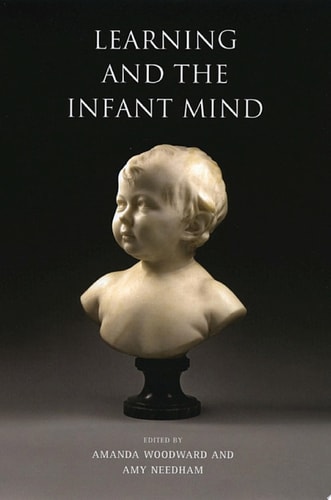
Learning and the Infant Mind
0
0
As an Amazon Associate and affiliate partner, Menrva Books earns from qualifying purchases. Learn more
Author Description
When asking how cognition comes to take its mature form, learning seems to be an obvious factor to consider. However, until quite recently, there has been very little contact between investigations of how infants learn and what infants know. For example, on the one hand, research efforts focused on infants' foundational conceptual knowledge-what they know about the physical permanence of objects, causal relations, and human intentions-often do not consider how learning may contribute to the structure of this knowledge. On the other hand, research efforts focused on infants' perceptual and motor learning-how they extract information from the environment, tune their behavior patterns according to this information, and generalize learning to new situations-often do not consider the potential impacts of these perceptual and learning mechanisms the structure of conceptual knowledge.Although each of these research efforts has made significant progress, this research has done little to narrow the divide between the disparate traditions of learning and knowledge. The chapters in this book document, for the first time, the insights that emerge when researchers who come from diverse domains and use different approaches make a genuine attempt to bridge this divide. The authors consider both infants' knowledge across domains, including knowledge of objects, physical relations between objects, categories, people, and language, and learning broadly construed, bringing to bear direct laboratory manipulations of learning and more general considerations of the relations between experience and knowledge.These authors have begun to consider whether and how the products of learning "go beyond" the input in several senses. As a result, several converging trends emerge across Whese diverse points of view. These authors have begun to investigate whether infants derive relatively abstract representations from experience, as well as the extent to which infants generalize information learned
Menrva's Summary
THE THESIS
This volume investigates the intersection between foundational conceptual knowledge and the mechanisms of learning in early infancy. Editors Amanda L. Woodward and Amy Needham compile research from diverse psychological domains to address the historical divide between studies of what infants know and how they acquire that knowledge. The text argues that bridging these fields is necessary to understand how infants derive abstract representations from environmental experience.
THE SCOPE MAP
What You Will Find
- Analysis of infant knowledge regarding objects, physical relations, categories, and language.
- Examination of perceptual and motor learning mechanisms.
- Discussion on how infants generalize information to new situations.
- Laboratory-based manipulations of learning processes.
Scope Limits
- The text does not provide a comprehensive guide to parenting or practical educational application.
- It does not cover long-term developmental outcomes beyond early infancy.
THE AUTHORITY PERSPECTIVE
Experts recognize this work as a significant effort to synthesize disparate research traditions within developmental psychology. Readers frequently note the academic density of the prose, which is intended for researchers and students of cognitive development.
Page Count:
348
Publication Date:
2008-01-01
Publisher:
Oxford University Press
ISBN-10:
0190293810
ISBN-13:
9780190293819
Psychology
Neuroscience
Developmental Psychology
Education
Psychotherapy
Community Tags
Similar Books