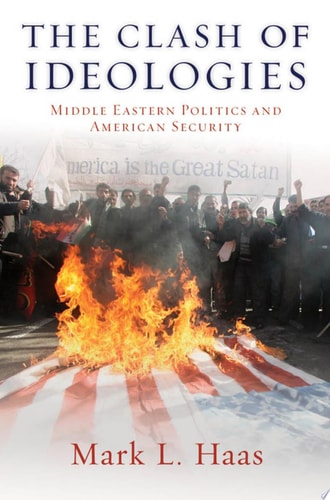
The Clash of Ideologies: Middle Eastern Politics and American Security
0
0
As an Amazon Associate and affiliate partner, Menrva Books earns from qualifying purchases. Learn more
Author Description
How do ideologies shape international relations in general and Middle Eastern countries' relations with the United States in particular? The Clash of Ideologies by Mark L. Haas explores this critical question. Haas argues that leaders' ideological beliefs are likely to have profound effects on these individuals' perceptions of international threats. These threat perceptions, in turn, shape leaders' core security policies, including choices of allies and enemies and efforts to spread their ideological principles abroad as a key means of advancing their interests.Two variables are particularly important in this process: the degree of ideological differences dividing different groups of decision makers ("ideological distance"), and the number of prominent ideologies that are present in a particular system ("ideological polarity"). The argument is tested in four case studies of states' foreign policies, primarily since the end of the Cold War: Iran, Saudi Arabia, Syria, and Turkey. As the argument predicts, ideological differences in these cases were a key cause of international conflict and ideological similarities a source of cooperation. Moreover, different ideological groups in the same country at the same time often possessed very different understandings of their threat environments, and thus very different foreign policy preferences. These are findings that other prominent international relations theories, particularly realism, cannot explain. Clash of Ideologies goes beyond advancing theoretical debates in the international relations literature. It also aims to provide policy guidance on key international security issues. These prescriptions are designed to advance America's interests in the Middle East in particular, namely how U.S. leaders should best respond to the ideological dynamics that exist in the region.
Menrva's Summary
THE THESIS
How do ideological differences between leaders shape international relations and national security policies in the Middle East? Mark L. Haas, a scholar of international security, investigates the causal link between the belief systems of political leaders and their perceptions of external threats. By analyzing how ideological distance and polarity influence foreign policy, the author challenges traditional realist frameworks that often overlook the role of identity and belief in state-level decision-making.
THE SCOPE MAP
What You Will Find
- A theoretical framework centered on ideological distance and ideological polarity.
- Comparative case studies of Iran, Saudi Arabia, Syria, and Turkey.
- Analysis of post-Cold War foreign policy shifts and security alliances.
- Policy recommendations for American diplomatic and security engagement in the Middle East.
THE AUTHORITY PERSPECTIVE
Scholars and policy analysts frequently cite this work for its systematic attempt to integrate constructivist elements into the study of international security. Readers note the academic rigor of the case studies, which provide a clear contrast to purely materialist interpretations of regional conflict.
Page Count:
320
Publication Date:
2012-04-20
Publisher:
Oxford University Press
ISBN-10:
0199838429
ISBN-13:
9780199838424
Politics
Kindle Store
Ideology
Systems Theory
Foreign Policy
Kindle eBooks
United States
World politics
Middle East
International relations
Security Studies
Categories
Community Tags
Similar Books