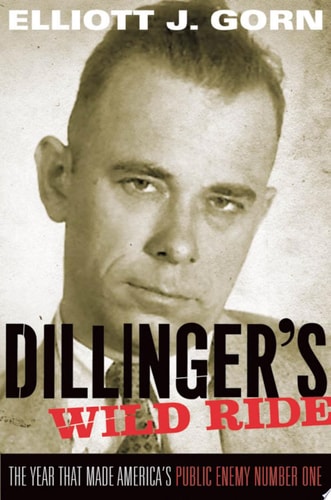
Dillinger's Wild Ride: The Year That Made America's Public Enemy Number One
Author Description
In an era that witnessed the rise of celebrity outlaws like Baby Face Nelson, Pretty Boy Floyd, and Bonnie and Clyde, John Dillinger was the most famous and flamboyant of them all. Reports on the man and his misdeeds--spiced with accounts of his swashbuckling bravado and cool daring--provided an America worn down by the Great Depression with a salacious mix of sex and violence that proved irresistible. In Dillinger's Wild Ride, Elliott J. Gorn provides a riveting account of the year between 1933 and 1934, when the Dillinger gang pulled over a dozen bank jobs, and stole hundreds of thousands of dollars. A dozen men--police, FBI agents, gangsters, and civilians--lost their lives in the rampage, and American newspapers breathlessly followed every shooting and jail-break. As Dillinger's wild year unfolded, the tale grew larger and larger in newspapers and newsreels, and even today, Dillinger is the subject of pulp literature, serious poetry and fiction, and films, including a new movie starring Johnny Depp. What is the power of his story? Why has it lingered so long? Who was John Dillinger? Gorn illuminates the significance of Dillinger's tremendous fame and the endurance of his legacy, arguing that he represented an American fascination with primitive freedom against social convention. Dillinger's story has much to tell us about our enduring fascination with outlaws, crime and violence, about the complexity of our transition from rural to urban life, and about the transformation of America during the Great Depression. Dillinger's Wild Ride is a compulsively readable story with an unforgettable protagonist.
Menrva's Summary
THE THESIS
What cultural and social conditions allowed John Dillinger to become a symbol of American defiance during the Great Depression? Elliott J. Gorn, a historian specializing in American culture, examines the brief but explosive criminal career of John Dillinger between 1933 and 1934. By analyzing contemporary media coverage, police records, and the broader economic climate of the 1930s, Gorn argues that Dillinger’s celebrity was a byproduct of a nation grappling with the transition from rural traditions to urban modernity. The author posits that the public’s obsession with the outlaw reflected a deep-seated desire for primitive freedom in the face of rigid social and economic collapse.
THE SCOPE MAP
What You Will Find
- A detailed timeline of the Dillinger gang’s bank robberies and jailbreaks between 1933 and 1934.
- An analysis of the role of newspapers and newsreels in constructing the myth of the celebrity outlaw.
- Historical evidence drawn from primary source accounts, police reports, and contemporary journalism.
- An exploration of the sociological impact of the Great Depression on American attitudes toward crime and authority.
THE AUTHORITY PERSPECTIVE
Historians and critics frequently cite this work for its ability to contextualize a criminal figure within the broader framework of American cultural history. Readers often note that the text balances detailed narrative reporting with academic insight into the era's social anxieties.
Page Count:
286
Publication Date:
2009-01-01
Publisher:
Oxford University Press
ISBN-10:
0199839972
ISBN-13:
9780199839971
True Crime
Biography
History
Criminals biography
Special Topics
American History
English & College Success
English
Middle West
Biography Autobiography
Community Tags
Similar Books