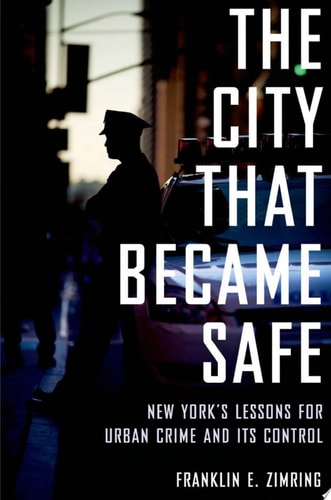
The City That Became Safe: New York's Lessons for Urban Crime and Its Control
0
0
As an Amazon Associate and affiliate partner, Menrva Books earns from qualifying purchases. Learn more
Author Description
The forty-percent drop in crime that occurred across the U.S. from 1991 to 2000 remains largely an unsolved mystery. Even more puzzling is the eighty-percent drop over nineteen years in New York City. Twice as long and twice as large, it is the largest crime decline on record.In The City That Became Safe, Franklin E. Zimring seeks out the New York difference through a comprehensive investigation into the city's falling crime rates. The usual understanding is that aggressive police created a zero-tolerance law enforcement regime that drove crime rates down. Is this political sound bite true-are the official statistics generated by the police accurate? Though zero-tolerance policing and quality-of-life were never a consistent part of the NYPD's strategy, Zimring shows the numbers are correct and argues that some combination of more cops, new tactics, and new management can take some credit for the decline. That the police can make a difference at all in preventing crime overturns decades of conventional wisdom from criminologists, but Zimring also points out what most experts have missed: the New York experience challenges the basic assumptions driving American crime- and drug-control policies.New York has shown that crime rates can be greatly reduced without increasing prison populations. New York teaches that targeted harm reduction strategies can drastically cut down on drug related violence even if illegal drug use remains high. And New York has proven that epidemic levels of violent crime are not hard-wired into the populations or cultures of urban America. This careful and penetrating analysis of how the nation's largest city became safe rewrites the playbook on crime and its control for all big cities.
Menrva's Summary
THE THESIS
How did New York City achieve the largest recorded decline in crime rates in modern history, and what does this shift reveal about the efficacy of urban policing and drug control policies? Franklin E. Zimring, a professor of law and expert in criminal justice, utilizes statistical analysis and historical review to evaluate the NYPD's strategies during the 1990s. He argues that while increased police presence and tactical management contributed to the decline, the New York experience fundamentally challenges the necessity of mass incarceration and suggests that violent crime is not an immutable feature of urban environments.
THE SCOPE MAP
What You Will Find
- A longitudinal analysis of New York City crime statistics from 1991 to 2000 compared to national trends.
- An evaluation of the impact of zero-tolerance policing versus alternative management and tactical strategies.
- A critical assessment of the relationship between crime reduction and prison population growth.
- A framework for harm reduction strategies regarding drug-related violence in metropolitan areas.
THE AUTHORITY PERSPECTIVE
Experts and criminologists recognize this work as a critical intervention in the debate over urban safety and policing efficacy. Readers frequently note the academic density of the prose, which provides a rigorous, data-driven counter-narrative to common political assumptions about crime control.
Page Count:
272
Publication Date:
2011-11-23
Publisher:
Oxford University Press
ISBN-10:
0199844429
ISBN-13:
9780199844425
History
Sociology
Public Policy
Law Enforcement
Urban Studies
Criminology
New York
Community Tags
Other Editions(2)
Similar Books