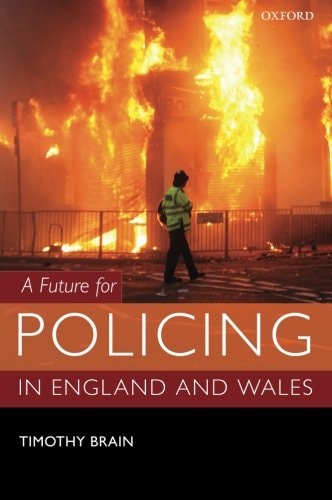
A Future for Policing in England and Wales
0
0
As an Amazon Associate and affiliate partner, Menrva Books earns from qualifying purchases. Learn more
Author Description
Encapsulating new policing developments under the Coalition, A Future for Policing: Developments in Policing in England and Wales for the 21st Century examines the major reform proposals and reports brought in since May 2010, including the Winsor Report and the 2010 Comprehensive Spending Review, and analyses what these changes mean for the future of policing in England and Wales.In the 1990s and 2000s the Police Service in England and Wales underwent profound change which saw massive increases in resources accompanied by increased centralism, a more business-like approach, and the proliferation of national objectives, targets and strategic plans. The Coalition Government signalled a radical shift away from that political consensus towards fewer numbers, a significant reduction in resources, decentralisation, and the creation of locally elected crime commissioners. This book argues that, as a consequence of this, British society and politics are entering a difficult and complex future, featuring a return to some aspects the social tension and disorder which characterised the 1970s and 1980s, and that the Police Service is currently ill-structured to adapt to the changes.Drawing on the author's own experience as one the country's most senior chief constables and his continuing experience as a police historian and analyst of contemporary police affairs, A Future for Policing will be of interest to senior police officers and policing academics, as well as those involved in leadership and other personal development programmes. It will also be of interest to policymakers and historians.
Menrva's Summary
THE THESIS
This book investigates whether the structural reforms implemented by the Coalition government in the United Kingdom have left the Police Service ill-equipped to manage the social tensions of the 21st century. Drawing on his extensive background as a former chief constable and his current role as a police historian, Timothy Brain evaluates the shift from the centralized, resource-heavy model of the 1990s and 2000s to the decentralized, austerity-driven framework introduced after 2010. The author argues that these radical policy changes, including the introduction of locally elected crime commissioners, create a complex future that mirrors the social instability of the 1970s and 1980s.
THE SCOPE MAP
What You Will Find
- Analysis of the 2010 Comprehensive Spending Review and its impact on police resources.
- Evaluation of the Winsor Report and its implications for police personnel and structure.
- Historical comparison between the policing models of the late 20th century and the post-2010 era.
- Assessment of the transition from centralized national objectives to decentralized local governance.
THE AUTHORITY PERSPECTIVE
Experts and academics in the field of criminal justice recognize this work as a critical primary analysis of a pivotal era in British policing reform. Readers frequently note the author's unique synthesis of high-level administrative experience and historical perspective, which provides a nuanced view of the challenges facing modern law enforcement leadership.
Page Count:
288
Publication Date:
2013-01-01
Publisher:
Oxford University Press
ISBN-10:
0199684456
ISBN-13:
9780199684458
History
Law Enforcement
Professional Career & Trade
Criminology
Police
Public Policy
Sociology
Community Tags
Other Editions(2)
Similar Books