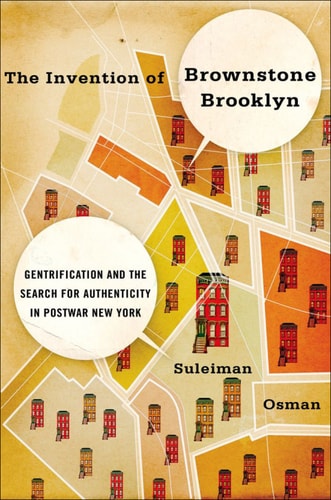
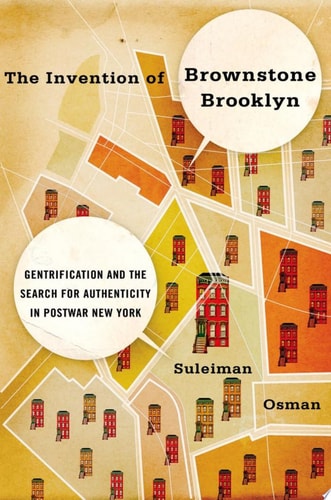
The Invention of Brownstone Brooklyn: Gentrification and the Search for Authenticity in Postwar New York
0
0
As an Amazon Associate and affiliate partner, Menrva Books earns from qualifying purchases. Learn more
Author Description
Considered one of the city's most notorious industrial slums in the 1940s and 1950s, Brownstone Brooklyn by the 1980s had become a post-industrial landscape of hip bars, yoga studios, and beautifully renovated, wildly expensive townhouses. In The Invention of Brownstone Brooklyn, Suleiman Osman offers a groundbreaking history of this unexpected transformation. Challenging the conventional wisdom that New York City's renaissance started in the 1990s, Osman locates the origins of gentrification in Brooklyn in the cultural upheavals of the 1960s and 1970s. Gentrification began as a grassroots movement led by young and idealistic white college graduates searching for "authenticity" and life outside the burgeoning suburbs. Where postwar city leaders championed slum clearance and modern architecture, "brownstoners" (as they called themselves) fought for a new romantic urban ideal that celebrated historic buildings, industrial lofts and traditional ethnic neighborhoods as a refuge from an increasingly technocratic society. Osman examines the emergence of a "slow-growth" progressive coalition as brownstoners joined with poorer residents to battle city planners and local machine politicians. But as brownstoners migrated into poorer areas, race and class tensions emerged, and by the 1980s, as newspapers parodied yuppies and anti-gentrification activists marched through increasingly expensive neighborhoods, brownstoners debated whether their search for authenticity had been a success or failure.
Menrva's Summary
THE THESIS
This book investigates the origins of gentrification in Brooklyn by examining how cultural shifts in the 1960s and 1970s transformed the neighborhood from an industrial slum into a hub of urban authenticity. Suleiman Osman, a historian of urban development, utilizes archival research and local history to challenge the narrative that New York's revival began solely in the 1990s. He argues that the movement was driven by idealistic young professionals who rejected suburban life in favor of historic preservation and traditional urban aesthetics. The text provides a framework for understanding how these grassroots efforts eventually collided with the realities of race and class displacement.
THE SCOPE MAP
What You Will Find
- Analysis of the postwar transition from industrial slum to post-industrial residential landscape.
- Examination of the 'brownstoner' movement and its ideological opposition to technocratic city planning.
- Historical documentation of the political alliances between middle-class newcomers and long-term residents.
- Exploration of the socio-economic tensions surrounding the search for neighborhood authenticity.
THE AUTHORITY PERSPECTIVE
Scholars and urban historians frequently cite this work as a foundational text for understanding the cultural roots of modern gentrification. Readers often note the academic rigor of the research, which provides a nuanced look at the intersection of urban policy and social identity.
Page Count:
356
Publication Date:
2011-01-01
Publisher:
Oxford University Press
ISBN-10:
0199832048
ISBN-13:
9780199832040
History
Architecture
Gentrification
American History
Sociology
Urban Studies
New York
Public Policy
United States
Community Tags
Other Editions(2)
Similar Books