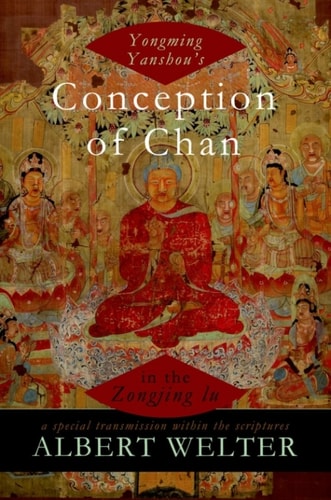
Yongming Yanshou's Conception of Chan in the Zongjing lu: A Special Transmission Within the Scriptures
0
0
As an Amazon Associate and affiliate partner, Menrva Books earns from qualifying purchases. Learn more
Author Description
Yongming Yanshou ranks among the great thinkers of the Chinese and East Asian Buddhist traditions, one whose legacy has endured for more than a thousand years. Albert Welter offers new insight into the significance of Yanshou and his major work, the Zongjing lu, by showing their critical role in the contested Buddhist and intellectual territories of the Five Dynasties and early Song dynasty China. Welter gives a comprehensive study of Yanshou's life, showing how Yanshou's Buddhist identity has been and continues to be disputed. He also provides an in-depth examination of the Zongjing lu, connecting it to Chan debates ongoing at the time of its writing. This analysis includes a discussion of the seminal meaning of the term zong as the implicit truth of Chan and Buddhist teaching, and a defining notion of Chan identity. Particularly significant is an analysis of the long underappreciated significance of the Chan fragments in the Zongjing lu, which constitute some of the earliest information about the teachings of Chan's early masters. In light of Yanshou's advocacy of a morally based Chan Buddhist practice, Welter also challenges the way Buddhism, particularly Chan, has frequently been criticized in Neo-Confucianism as amoral and unprincipled. Yongming Yanshou's Conception of Chan in the Zongjing lu concludes with an annotated translation of fascicle one of the Zongjing lu, the first translation of the work into a Western language.
Menrva's Summary
THE THESIS
This work investigates the historical and philosophical significance of Yongming Yanshou and his monumental text, the Zongjing lu, within the context of Five Dynasties and early Song dynasty intellectual history. Albert Welter, a scholar of East Asian Buddhism, utilizes historical analysis and textual examination to argue that Yanshou’s work serves as a critical bridge between Chan Buddhist identity and broader scriptural traditions. By re-evaluating the Zongjing lu, Welter challenges long-standing Neo-Confucian critiques that characterized Chan practice as lacking moral or ethical foundations.
THE SCOPE MAP
What You Will Find
- A comprehensive biographical study of the Buddhist thinker Yongming Yanshou.
- An in-depth examination of the Zongjing lu and its role in contemporary Chan debates.
- Analysis of the term zong as a defining concept for Chan identity and Buddhist truth.
- An annotated translation of the first fascicle of the Zongjing lu, providing primary source access to Western readers.
THE AUTHORITY PERSPECTIVE
Scholars recognize this text as a foundational contribution to the study of Chinese Buddhist intellectual history and the development of Chan. Readers frequently note the academic density of the prose, which provides a rigorous framework for understanding the complexities of Yanshou’s philosophical legacy.
Page Count:
400
Publication Date:
2011-01-01
Publisher:
Oxford University Press
ISBN-10:
019984240X
ISBN-13:
9780199842407
History
Philosophy
Religion
Zen Buddhism
Asian Studies
Buddhism
Chan Buddhism
Special Topics
China religion
Community Tags
Similar Books