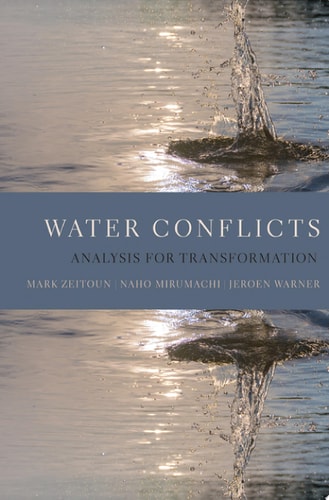
Water Conflicts: Analysis for Transformation
0
0
As an Amazon Associate and affiliate partner, Menrva Books earns from qualifying purchases. Learn more
Author Description
Water Conflicts applies cutting-edge thinking to identify pathways that can transform complex water conflicts. It challenges existing power-blind and politics-lite analysis that is very deeply-held and recurring in debates that suggest causal links between scarcity and violence-or peace. This book presents a much needed revision of transboundary water analysis, leading to a rethink on the way water is used and contested, with a focus on harm experienced both by the most vulnerable water users and the environment. Recognizing that conflicts are never static, Mark Zeitoun, Naho Mirumachi, and Jeroen Warner's "transformative analysis" provides multi-disciplinary tools and perspectives to understand and address the complexities involved. The approach is stress-tested through dozens of examples around the globe, and it incorporates collective evidence and knowledge of the London Water Research Group. The insights on water diplomacy will be most welcome by analysts, activists, diplomats, and all others tackling water conflicts. Seeking to motivate improvement of transboundary water arrangements towards further equity and sustainability as a practical agenda, the book is a fresh antidote to the detached role that researchers and policymakers often play.
Menrva's Summary
THE THESIS
This book investigates how to transform complex water conflicts by challenging conventional, power-blind analytical frameworks that oversimplify the relationship between resource scarcity and violence. The authors, affiliated with the London Water Research Group, argue that existing policy debates often ignore the political dimensions of water management. By introducing a 'transformative analysis' framework, they provide a multi-disciplinary approach that prioritizes the needs of vulnerable populations and environmental health over static, state-centric models.
THE SCOPE MAP
What You Will Find
- A transformative analysis framework for transboundary water disputes
- Multi-disciplinary tools for assessing power dynamics in resource management
- Global case studies demonstrating the application of water diplomacy
- Strategies for improving equity and sustainability in water arrangements
Scope Limits
- Does not provide a singular, universal solution for all water disputes
- Focuses primarily on transboundary and political conflicts rather than local technical engineering solutions
THE AUTHORITY PERSPECTIVE
Experts and practitioners in water diplomacy recognize this work as a significant critique of traditional, depoliticized approaches to resource management. Readers frequently note the academic rigor of the text, which serves as a practical resource for diplomats and policy analysts seeking to move beyond conventional conflict analysis.
Page Count:
201
Publication Date:
2020-01-01
Publisher:
Oxford University Press
ISBN-10:
0190098112
ISBN-13:
9780190098117
Conflict Resolution
Trades & Technology
Water Rights
Water Supply
Water Resources
International relations
Environmental
Nature
Community Tags
Similar Books